
| Mumbai, (IANS) Shilpa Shetty and Palak Tiwari have once again joined forces —this time for a grooming and skincare collaboration. Sharing her experience of collaborating with the 'Sukhee' actress, Palak called her an 'inspiration'. Talking about working with Shilpa once again, Palak shared, "Shilpa ma’am is such an inspiration! She carries herself with so much grace, and her energy on set is just incredible. I’ve learned so much from her—whether it’s about fitness, style, or just the way she balances everything with such ease. Getting to share screen space with her again is truly special!" Shilpa and Palak represent two generations of Bollywood glam—one that set the bar and one that’s redefining it. These two also share a common love for fitness. Shilpa has long been a wellness inspiration, while Palak, with her youthful energy, is all about staying active and looking effortlessly stylish. Additionally, Shilpa and Palak know how to turn heads with their impeccable fashion sense. Refreshing your memory, Shilpa and Palak previously teamed up for a hair care campaign. In addition to this, Palak has also been roped in for Sanjay Dutt's "The Bhootnii". Helmed by Sidhaant Sachdev, the movie brings together a star-studded cast featuring Sanjay Dutt, Mouni Roy, Palak Tiwari, Sunny Singh, Beyounick, and Aasif Khan. Soham Rockstar Entertainment and Three Dimension Motion Pictures are presenting "The Bhootnii" produced under the banner of A Soham Rockstar Entertainment Production. The recently released teaser of the drama provided us an insight into a mystical world where 'love turns into darkness'. The video featured Sunny Singh screaming to get back his love (Palak Tiwari) from a supernatural being (Mouni Roy). We also saw Sanjay Dutt holding two swords, ready to fight spirits. For those who do not know, the film was previously titled "The Virgin Tree", but has now been renamed.The highly-awaited project will be hitting the theatres on 18th April 2025. Shilpa Shetty and Palak Tiwari come together for an exciting collaboration | MorungExpress | morungexpress.com |
Shilpa Shetty and Palak Tiwari come together for an exciting collaboration (2025-06-14T12:23:00+05:30)

Vogue World brings together fashion and sport in Paris (2025-06-14T12:22:00+05:30)
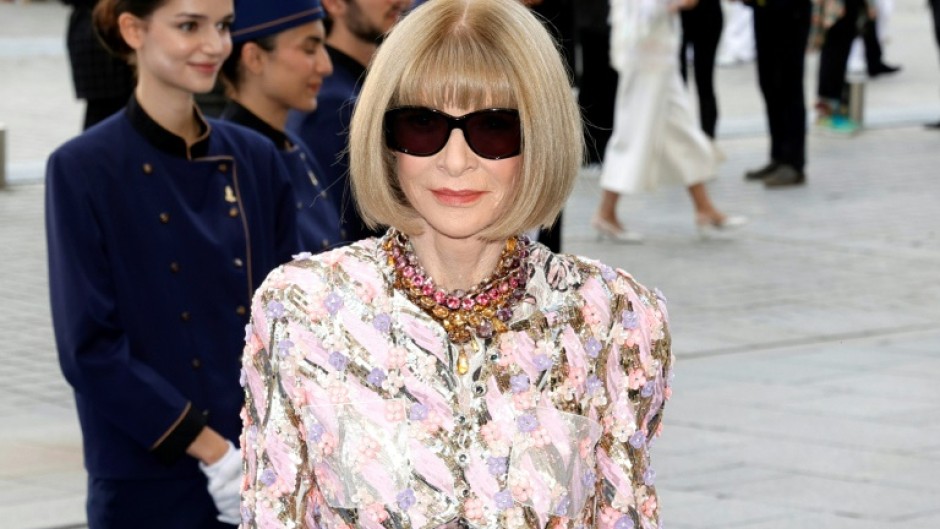 PARIS - Paris played host Sunday to an ultra-glitzy collision between fashion and sport as Vogue put on its latest branding event in the heart of the city ahead of the Olympic Games. With magazine sales falling precipitously, the fashion bible has turned to star-studded events in a bid to keep its name relevant. "Vogue World: Paris" follows similar events in New York and London, and was neatly timed in the midst of fashion week and on International Olympic Day. Taking over Place Vendome in the heart of the city, the idea was to match each decade of fashion from the past century -- since Paris last hosted the Games in 1924 -- with a different sport, from gymnastics to breakdancing to fencing. The show began with Jean Paul Gaultier putting the finishing touches to the dress of singer Aya Nakamura, while an orchestra delivered a classical take on Daft Punk's "Around the World" for the 800 guests that included Pharrell Williams, Venus Williams, Katy Perry and Bad Bunny. The first part of the show paired cycling with 1920s fashion, including vintage Chanel dresses from the period, while Nakamura sang. At one point, supermodels Gigi Hadid and Kendall Jenner rode horses around the square -- all four wearing Hermes. Other brands providing the clothes included Balenciaga, Balmain, Dior, Louis Vuitton and Saint Laurent. "We're here to celebrate the wonder of French fashion. So I'm just grateful for all the support from the French community and the world of fashion here in Paris," Vogue supremo Anna Wintour told AFP before the event kicked off. dar-er/ Vogue World brings together fashion and sport in Paris |
For a true war on waste, the fashion industry must spend more on research (2025-06-09T13:19:00+05:30)
Mark Liu, University of Technology SydneyThe rise of fast fashion in Australia means 6000 kg of clothing is dumped in landfill every 10 minutes. The ABC’s War On Waste visualised this statistic by piling a giant mound of clothing waste in the middle of the city. So what to do about it? Sustainable fashion experts advocate abstaining from buying fast fashion, promoting clothing swaps and repairing old clothing. Others suggest buying organic and ethically-sourced clothes or designing clothing using zero waste techniques. The hope is that greater transparency in supply chains will lead to an end to sweatshops and unsustainable fashion practices. These are admirable initiatives, but they only reduce wastage or delay garments from ending up in landfill. They do not address the fact that the scale of fast fashion is so massive it can easily eclipse other sustainability initiatives. Nor do they address the wastefulness of existing technologies and the urgent need to research new ones. Even if we could magically stop the global production of all garments, we would still need new, green technology to clean up the waste we have already created. There are long-term strategies for green technologies such as electric cars, but where are the major companies and research institutes developing the next generation of sustainable fashion technologies? The development of new synthetic biology technologies may be the key. From catwalk to researchI would like to share my journey from zero waste fashion design pioneer to trans-disciplinary fashion researcher to highlight the challenges faced by sustainable fashion and the need for more research. Ten years ago, I presented my “Zero-Waste” Fashion collection at London Fashion Week. I and other sustainable designers at the time took the waste streams of other industries such as scrap materials and leftover fabric and created our collections from them. I was selected for “Estethica”, a new initiative created by sustainable fashion gurus Orsola De Castro, Filippo Ricci and Anna Orsini from the British Fashion Council. Sustainable fashion was shown on London catwalks next to luxury fashion - a revolutionary step for the time. I pioneered a way of creating tailored, high fashion garments so that all the pieces of a garment fitted together like a jigsaw puzzle and no waste was created. Conventional pattern cutting creates about 15% wastage of material, even if the pattern has been optimised by a computer. I wanted to systemically change the way clothing was made. But the problem with zero-waste design is that it is very difficult to create. It requires a skilled designer to simultaneously imagine the garment as a 3D item and a flat pattern, while trying to fit the pieces together like a jigsaw. It is easy to make an unfitted or baggy garment, but creating something that looks good and fits the body was a real challenge. Even after all these years, most contemporary zero-waste fashion is still not tailored to the body. I practised this technique for years to master it. It required breaking all the rules of conventional pattern-making and creating new techniques based on advanced mathematics. These were exciting times. Our fabrics were organic, we made everything locally and ensured everyone was paid an ethical wage. The press loved our story. But problems started to emerge when it came to sales. We had to sell more expensive garments, using a smaller range of fabrics - our materials and labour costs were higher than those of companies that produced overseas. Often fashion buyers would say they loved what we did, but after looking at the price tag would politely take their business elsewhere. As a sustainable fashion designer, my impact was limited. It was also impossible to teach zero-waste fashion design without explaining how advanced mathematics applied to it. It was time to try a new approach, so I decided to apply science and maths to traditional fashion techniques. My PhD research explored the underlying geometry of fashion pattern-making. Combining fashion with science allowed the traditional techniques and artistry of making garments to be explained and communicated to scientist and engineers. In the meantime, fast fashion companies rapidly expanded, with Zara, Topshop and H&M reaching Australia by 2011. They produced massive amounts of cheap products making low margins on each garment. Consumers quickly became addicted to the instant gratification of this retail experience. The size and scale of their production produced hundreds of tonnes of garments every day. The limits of fashion technologyFast fashion companies such as H&M have developed recycling initiatives in which consumers can exchange old clothing for discount vouchers. This is supposed to prevent clothing from going to landfill, instead recycling it into new clothing. However, there are those who are sceptical of H&M’s recycling process. In 2016, investigative journalist Lucy Siegle crunched the numbers and concluded that “it appears it would take 12 years for H&M to use up 1,000 tons of fashion waste”. This, she said, was the amount of clothing they produce in about 48 hours. A 2016 H&M sustainability report reveals that only 0.7% of their clothes are actually made from recycled or other sustainably-sourced materials. In the report, H&M acknowledges :
In fact, their 2016 annual report states that more research is needed:
Sustainable technologies strive for a “circular economy”, in which materials can be infinitely recycled. Yet this technology is only in its infancy and needs much more research funding. H&M’s Global Change Award funds five start-up companies with a total of 1 million Euros for new solutions. Contrast this with the millions required by the most basic Silicon Valley start-ups or billions for major green technology companies such as Tesla or SolarCity. There is a dire need for disruptive new fashion technology. Many of the promising new technologies require getting bacteria or fungi to grow or biodegrade the fabrics for us - this is a shift to researching the fundamental technologies behind fashion items. For example, it takes 2700L of water and over 120 days to grow enough cotton to make a T-shirt. However, in nature, bacteria such as “acetobacter xylinum” can grow a sheet of cellulose in hours. Clothing grown from bacteria has been pioneered by Dr Suzanne Lee. If a breakthrough can be made so that commercially grown cotton can be grown from bacteria, it may be possible to replace cotton fields with more efficient bacteria vats. But why just stick with cotton? Fabrics can be generated from milk, seaweed, crab shells, banana waste or coconut waste. Companies such as Ecovate can feed fabric fibres to mushroom spore called mycelium to create bioplastics or biodegradable packaging for companies such as Dell. Adidas has 3D printed a biodegradable shoe from spider silk developed by AM silk. Although I began my journey as a fashion designer, a new generation of materials and technologies has pulled me from the catwalk into the science lab. To address these complex issues, collaboration between designers, scientist, engineers and business people has become essential. To clean up the past and address the waste problems of the future, further investment in fashion technology is urgently needed. Mark Liu’s podcast interview for the ABC’s War on Waste series will be published on the ABC online tomorrow. Mark Liu, Chancellors Postdoctoral Research Fellow, Fashion and Textiles Designer, University of Technology Sydney This article is republished from The Conversation under a Creative Commons license. Read the original article. |

Designer fashion, nostalgia magnet - what’s behind the rise and rise of the sneaker? (2025-06-04T12:24:00+05:30)
In June this year, hundreds of Australian shoppers queued – some overnight – to buy a pair of Yeezy Boost 350 V2 Black Static Adidas sneakers the moment they went on sale. Before lining up, customers had to register and go into a draw to determine whether they could buy a pair. The shoes sold for a few hundred dollars but are now being traded for up to A$3000. This quest to obtain limited edition sneakers designed by rapper Kanye West is not an isolated phenomenon. People have long gone to extreme lengths to get their hands on the latest kicks. There have been reports of sneaker violence since the 1980s. For those wishing to form a more orderly queue, the internet has responded with news services and dedicated message boards to help people get the latest kicks. Other sites treat sneakers like stock market commodities. But how does society’s sneaker love tally with our awareness of the environmental and human cost of consumerism? A brief history The first sneakers appeared in 1830s England, when Liverpool Rubber bonded a canvas outer onto a vulcanised rubber sole, creating the original sand shoe for the Victorian middle classes to wear on the beach. Different styles of the shoe were developed in the UK and the US throughout the 19th century to respond to athletic pursuits like running, tennis, jumping and sailing. The term “sneaker” was coined in the US in the 1870 to describe the shoe because it was noiseless. Athletes in Paris wore sneakers at the first modern Olympic Games in 1900. The American pro-basketball player Charles H. Taylor, passionately promoted the sneakers designed by Marquis M. Converse in 1917. By 1923, Taylor’s improvements had been incorporated into the shoe, his signature added to their design, and Converse “Chucks” have remained unchanged since. Adidas was founded by the Dassler brothers in Germany in 1926, and Puma was founded in 1948 when the Dassler brothers split. Onitsuka Tiger (ASICS) were founded in Japan in 1949 and Reebok started making sneakers in 1958. New Balance started creating their “Trackster” sneakers in 1961, and Nike was founded in 1972. At every point, sneakers were created to support athletes, but also to promote lifestyles that connected leisure with physical activity. Since the 1970s, sneakers have been linked to skateboarding and hip-hop culture, including break dancing; urban pursuits that require a high degree of comfort and ease of movement. The explosion of hip-hop from the mid-1980s and its global dominance in the 1990s meant that sneakers quickly became a visual symbol of hip-hop and a symbol of its separation from the mainstream. Run DMC’s 1986 track, My Adidas was as much about the band’s love for sneakers as it was about how quickly people judged black youth who wore sneakers to be troublemakers. Likewise, when rave culture blossomed in the 1980s and 1990s, sneakers became the footwear of choice for the 24-hour party people who dressed to sweat. Sneakers today The current nostalgia in sneakers extends to design imagery, styles, and colour combinations. In April this year, Adidas issued a limited edition version of the My Adidas Superstar 1986 sneaker. Luxury brands have also taken note, capitalising on historical references, status concerns and a relaxation in social dress codes. Leading high-fashion brands, including Chanel, Louis Vuitton and Balenciaga now consider sneakers a must-have fashion item in their collections. Balenciaga’s recent Triple S sneakers (priced at around A$1300) echo the platform sneaker trends of the 1990s, with the company’s CEO Cédric Charbit, noting “sneakers … blend nicely with the way we live”. Where once 1980s women swapped their commuter sneakers for power heels at the office, people now wear their sneakers all day. Charbit believes the sneaker has become, “very versatile, it goes from day to night, it goes for the weekend, it goes for work”. Sustainability and ethical production While many sneaker fans continue to prioritise style over environmental concerns, others are demanding transparency around the ethics and impact of production, leading to the rise of the sustainable sneaker. Meghan, The Duchess of Sussex, favours Veja sneakers made from wild Amazonian rainforest rubber. Adidas has been making sneakers using recycled ocean plastic since 2015, but says it wants to go further. It launched the Futurecraft Loop in April, a sneaker made exclusively from 100% reusable Thermoplastic polyurethane that can be recycled again and again. Adidas, Brooks, Reebok, and Salomon showed positive working conditions at their factories in a 2018 survey, but there was still a problem with low wages. Sites like the Good Shopping Guide can help customers can make more informed choices. But sustainable fashion expert Mark Liu notes, “Sneakers are still extremely problematic because of all their toxic petrochemical components, glues and the amount of greenwash in the industry”. \ One key to enduring sneaker love is scarcity. Adidas only released 1986 of their limited-edition My Adidas Superstar 1986 shoes. West also generates exclusivity with low production numbers – only 40,000 pairs of Yeezys are made worldwide for each drop and shops in Australia may only have 25 pairs of each incarnation. The combination of rarity, and the myriad cultural meanings embedded in sneakers creates an emotional pull for collectors like DJ Jerome Salele’a that ties them to sneaker, hip-hop, skater and rave communities around the globe. The ultimate sneaker is a comfortable vehicle for the body to move through the world that expresses the wearer’s desires, dreams and aspirations and crosses social, geographic and language boundaries.  Emily Brayshaw, Lecturer, Fashion and Design History, Theory, and Thinking, University of Technology Sydney This article is republished from The Conversation under a Creative Commons license. Read the original article.
|
Peeking under the clothes at the Melbourne Fashion Festival (2025-05-02T13:27:00+05:30)
|
If you wear clothes – and most of us do – there will be an event, exhibition or activity at this week’s Virgin Australia Melbourne Fashion Festival (VAMFF) – which started on Monday – that will intrigue and inspire you. Even those who take an anti-fashion stance might find themselves enthused by the diverse offering under the broad heading of “fashion” in the extensive cultural program which fuses fashion with the arts, film, dance and food. So how did it get to where it is now, since its beginnings 18 years ago? In 1996 I was fortunate to be invited to join a group of individuals to discuss the status of the Australian fashion industry, which at the time was struggling within a recessed economy. In this environment a culture of culpability had arisen - designers blamed buyers for not buying their collections, buyers blamed manufacturers for their poor quality or high prices, retailers blamed consumers for not being interested. An idea sprang forth to develop a festival that acknowledged the greatness inherent in the local fashion industry – to celebrate the goodness and create positive role models. The ethos of the Festival from day one was to excite the person on the street and provide the inspiration to engage and this spirit has been a driving force in establishing the Melbourne Fashion Festival as a successful event model. The festival is funded both by the state government and a range of partners from the private sector. Each year the fashion spotlight shines on Melbourne and we continue to see upward trends related to economic impact, promotional exposure, cultural positioning and associated retail expenditure, as evidenced by the City of Melbourne’s 2012 retail strategy report card: more than 380,000 fashion devotees attended the Festival’s 126 officially programmed events and aligned activities … and the Festival’s Cultural Program delivered over 79 fashion themed events. Whereas other major fashion weeks concentrate activities on a distinctive tier of the industry’s most notably premium design brands, the Melbourne event seeks to celebrate and showcase the depth and breadth of all things “fashion”. At the “big four” events – Paris, Milan, London and New York fashion weeks – designer brands are showcased to a select audience of between 100 to 300 attendees, who predominatly are retail buyers and fashion media, with a sprinkling of celebrities carefully placed in the front row to generate media interest. By contrast, the Melbourne Fashion Festival is about the democratisation of fashion, providing a platform for all tiers of the industry, from micro operators such as those early career designers whose collections were highlighted on Tuesday at the Tiffany & Co. National Designer Award, through to the large chain stores such as David Jones who showcased their in-store collections as part of the Opening Event on Monday night. The Fashion Festival seeks to support emerging designers - the National Designer Award has helped launch the careers of designers such as Toni Maticevski, Dion Lee, Josh Goot and Romance Was Born. There’s also the National Graduate Showcase which champions fashion design graduates. As well as giving them the opportunity to share the runways with leading designers it also offers mentoring opportunities. The Festival’s greatest strength lies in the consumer to business relationships it has enhanced. The energy and visual experience is not confined to the media spectacle of fashion personalities and celebrities. Instead the public is provided with access to runway shows which lets them engage with fashion brands on a different level. Many Festival events such as those in the cultural program are free; while others such as the runway shows can be accessed through ticket sales. Like other fashion events, the Festival showcases designer collections – but its catwalks are enormous lengthened runways with audience capacities sometimes in the thousands, worlds apart from the discreet showcases in the top four fashion capitals. Through a digital interface developed in the past two years, the audience can also “see now, buy now”, an innovative concept that directly links Australian designers with the consumer. Behind the scenes and beyond the month of March, the Festival works collaboratively with the Victorian State Government on trade missions, export strategies and global connections in promoting the local fashion industry to the world, subsequently promoting continuing growth of this sector. Like many fashion sectors around the globe, the local industry has drastically repositioned itself over the past three decades - moving from geographically-connected clusters within centralised inner city manufacturing bases to disconnected, wide-spread companies housed in anonymous spaces across the country. Due to these shifts, which have seen the demise in local manufacturing, businesses now work in a framework of a global supply chain connected through digital interfaces. This is a phenomenon that has impacted the fashion industry worldwide. Recognising this major shift the Fashion Festival has developed forums and seminars such as such as the Business Seminar, Fashion Industry Forums and Marketing Breakfast designed to bring the dispersed industry together. These forums provide industry intelligence, enable networking and support business growth. This event is a great opportunity to celebrate Australian fashion creativity and acknowledge the broad impact it has. I have already started a wish list of must-have fashion items that I’ll be adding to my wardrobe! The Melbourne Fashion Festival is on now. Details here. Are you an academic or researcher working in fashion or textiles? Contact the Arts + Culture editor.  Karen Webster, Associate Professor - Deputy Head of Fashion and Textiles, RMIT University This article is republished from The Conversation under a Creative Commons license. Read the original article. |
‘Cultural expression through dress’: towards a definition of First Nations fashion (2025-02-11T12:16:00+05:30)
| This May, Wiradjuri woman Denni Francisco and her label Ngali will be the first Indigenous designer to have a solo show at Australian Fashion Week. This is a long time coming for the First Nations fashion industry and the designers and artists who have laboured in the fashion space for many years. In 2003, Dharug woman Robyn Caughlan was the first Indigenous designer to show her ready-to-wear collection at Australian Fashion Week. Over the past 20 years, many Indigenous designers have shown their work in group shows. Francisco’s solo show is an important step forward for the industry. But First Nations fashion is not just about the catwalk. It is a politically charged practice. We need to have a discussion on what we mean when we say “First Nations fashion”. What is ‘fashion’? During the European colonial reign from 1788 into the 1860s, Australian administrators were shocked at the appearance of Indigenous populations, often imposing new forms of clothing. To them, Indigenous peoples were generally seen as wearing insufficient, “unsophisticated” and “static” clothing. From the 19th to early 20th century, sociologists argued only modern, urban societies like France had a fashion “system” of production, business and the trickle down of styles. By the 1970s, UK and US researchers started to use the word “dress” instead of “fashion” to connect wider forms of clothing, bodily and cultural practices. “Fashion” has, however, been used as far back as the 1970s to describe Australia’s emerging First Nations textiles, garment and runway shows. Recently, First Nations researchers in Canada and the United States discussed using “Indigenous fashion-art-and-dress” to describe First Nations clothing practices, fashion design and integration of art. In Australia we have not yet had a conversation about a term that could encompass fashion design, textiles and art. Important First Nations fashion associations, organisations, groups, and projects have attempted their own terms and strategies. We need a phrase which includes everything from wearing Aboriginal flag t-shirts in the city, self-designed outfits in the Tiwi Islands and commissioned garments in galleries and museums. Many First Nations designers are not designing for the fashion industry or galleries which sell their work as art. They are designing to break colonial bonds, share cultural stories, and provide a wearable form of wellbeing. A matter of style We have been exploring the words that Australian First Nations fashion researchers, designers, artists and producers use to describe their work and the industry. The new millennium has motivated a great flowering of new First Nations designers and artists. They describe themselves using words such as fashion designer, artist, curator and their work as fashion and art and fashion labels. They variously describe their work as being Aboriginal, Torres Strait Islander or First Nations owned, or specifically emphasise their cultural Nations and groups. Artist Elisa Jane Carmichael (Quandamooka) calls traditional and cultural clothing and adornment “the first creations of Australian fashion”. Writer Tristen Harwood (First Nations) has written about the difference between “style” and “fashion”. He defines First Nations fashion as the marketing and buying of Indigenous designed fashions. By style, Harwood means the dynamic process of dressing that touches on identity, politics, self-creation and culture. Style is about wearing attire, in all its complexity, and includes the long history from forced clothing to the revival of cultural garments and looks. This distinction between fashion and style also informs Magpie Goose co-owner and director Amanda Hayman (Kalkadoon and Wakka Wakka). She notes how “Aboriginal cultural identity was systematically repressed” from the early 1800s to the late 1960s. With this repression, she argues, “cultural expression through dress was significantly impacted”. Now, a new generation of fashion figures such as teacher and designer Charlotte Bedford (Wiradjuri), National Gallery of Victoria curator Shanae Hobson (Kaantju) and @ausindigenousfashion founder and curator Yatu Widders Hunt (Dunghutti and Anaiwan) prefer the terms “Indigenous fashion” or “First Nations fashion”. Moving forward While there is a wide range of terminologies and languages used within the First Nations fashion sector, it is time for a bigger discussion about a collective and holistic term. By embracing a holistic term, First Nations fashion would have a new and inclusive definition. It could acknowledge both traditional and contemporary practices of our First Nations peoples, including the role of artists, and encompass everything from fashion runways to creating garments for galleries, as well as everyday First Nations style. First Nations fashion is political. If you dig deep into fashion stories you will also hear many tales about racism, exclusion and discrimination, as well as survival and healing. We are moving into a new chapter of truth telling and the sharing of how racism and discrimination have influenced First Nations clothing practices and the fashion industry. In landing on a collective term we might better represent First Nations peoples’ fashion, art and style stories as well as their community, cultural and design contributions – the business of fashion in Australia itself.  Treena Clark, Chancellor’s Postdoctoral Indigenous Research Fellow, Faculty of Design, Architecture and Building, University of Technology Sydney and Peter McNeil, Distinguished Professor of Design History, UTS, University of Technology Sydney This article is republished from The Conversation under a Creative Commons license. Read the original article. |
Fashion victims? How clothes took over our art galleries (2025-02-10T11:19:00+05:30)
|
In Melbourne Jean Paul Gaultier: From the Sidewalk to the Catwalk and Express Yourself: Romance Was Born for Kids, are both at NGV; Adelaide’s Fashion Icons: Masterpieces from the Musée des Arts Décoratifs is at the Art Gallery of South Australia and Brisbane’s Future Beauty: 30 Years of Japanese Fashion, is showing at GOMA. The fashion for fashion exhibitions is not confined to major state galleries. Bendigo Art Gallery has just closed Undressed: 350 years of Underwear in Fashion, after establishing a strong fashion exhibition niche by partnering with London’s V&A Museum to show The Golden Age of Couture: Paris and London 1947-57 in 2009. On the west coast, an exhibition created by Sydney’s Museum of Applied Arts and Sciences, Frock Stars: inside Australian Fashion Week, has been showing at the Western Australian Museum. Most of these result from carefully negotiated partnerships with international museums: the V&A; the Musée des Arts Décoratifs, Paris; the Montreal Museum of Fine Art; the Kyoto Costume Institute, and fashion houses such as Maison Jean Paul Gaultier. They are part of a worldwide trend for fashion exhibitions in art museums. Some of this emerges from a longstanding commitment to collecting fashion and textiles. The critically acclaimed and spectacularly well-attended exhibition, Alexander McQueen: Savage Beauty, at the Costume Institute at the Metropolitan Museum of Art, New York, in 2011 was enriched by the museum’s well established collecting and research focus. Likewise, the NGV fashion exhibitions sit logically within its collection and research directions. But the fashion for fashion exhibitions is not confined to art or design museums with significant fashion collections. So what’s going on? We all have bodies, we all wear clothes; we all observe others wearing clothes. Whether people acknowledge an interest in fashion or not everyone is surrounded by it. People interested in fashion no longer rely on magazines and image blogs to keep up; live streaming of couture and ready to wear collections gives instant access to what’s being shown, who the celebrities are, which designers are doing what. Looking at dress and adornment can be aesthetic, sensual and visceral; experienced and understood in different ways by people of all ages and genders. Museum fashion exhibitions amplify varieties of visual experience and give access to research-based fashion knowledge. They provide a rare glimpse into the materiality of high fashion objects; haute couture garments and textiles; volume and drape; colour, texture, surface; and details of inventive highly skilled artisanship. Visitors to exhibitions such as Jean Paul Gaultier in Melbourne and Fashion Icons in Adelaide, where the garments are shown without the impediment of glass, can see close-up the allure and charisma of these material objects. Museum audiences understand how fashion’s periodic ruptures – in conception, style, materials – are linked to cultural history, music, street trends and other manifestations of zeitgeist. Audience interest in fashion objects, processes, history, technologies, internal systems, narratives and mythologies is parallelled by contemporary critical knowledge emerging from the burgeoning academic field of Fashion Studies. Fashion scholarship explores aesthetics, gender, sexuality, class, custom and culture, not to mention economic history, textile technology, film and popular culture, and any number of related questions. Why wouldn’t people be fascinated by exhibitions which augment knowledge and pleasure in this field? New course development, scholarly journals, and almost exponential rates of scholarly and popular publishing are occurring simultaneously with the growth of fashion exhibiting in museums. The exhibition phenomenon itself is critically contextualised in publications such as Fashion and Museums: Theory and Practice (2014) and Exhibiting Fashion: Before and After 1971 (2014). All of this is occurring at a time when hierarchies – what is deemed worthy or unworthy of museum space, what is considered fine or applied art – are collapsing. When Art Gallery of New South Wales curator, Jane de Teliga, presented her exhibition Art Clothes in 1980, she told me “a lot of noses were out of joint” about the idea of fashion in the gallery. Some of her colleagues thought it inappropriate for fashion to share museum space with art. Some still roll their eyes, reiterating familiar themes of inanity, frivolity and superficiality that have accompanied fashion since its modern inception in the 19th century. Nonetheless Art Clothes was quickly followed at The Art Gallery of NSW by the ambitious Fabulous Fashion 1907-67 from the Costume Institute of the Metropolitan Museum of Art, New York (1981) and Yves Saint Laurent Retrospective (1987). Contemporary artist Anastasia’s Klose’s One-Stop Knock-Off Shop installation , at the NGV’s Melbourne Now (2013/14) placed art and fashion in their rightfully ambiguous context, in which the cultural interface and the cash nexus of art and fashion are playfully unmasked. Today’s museum directors have to generate exhibition ticket sales, partners, sponsors and, above all, positive publicity. They have to keep established audiences, attract new ones and seed the audiences of the future through programs for kids. They need to create an air of excitement and relevance around their institutions. All of this while maintaining cultural integrity and supporting the original research which creates new knowledge. Whether fashion is art; whether the art world is now all about fashion; whether fashion is commercialising the art museum are questions much less interesting than the immediacy, provocation, knowledge and pleasure we gain from the fashion for fashion.  Sally Gray, Visiting Scholar in Cultural History, School of Art History and Art Education, UNSW Art & Design, UNSW Sydney This article is republished from The Conversation under a Creative Commons license. Read the original article. |
Lovikali Swu, Kevilelhou Sokra crowned Mr & Miss Chümoukedima 2024 (2024-10-01T11:44:00+05:30)
 Lovikali Swu from North Town Hr Sec School and Kevilelhou Sokra from Norman Pfutsure College were crowned the Mr and Miss Chümoukedima 2024. Iiilo Zhimomi from Tetso College and Zubenthung Ngullie from Mount Mary Hr Sec School bagged 1st runners-up. The 2nd runners-up title went to Akokba and Kivikali H Chophy from St Joseph’s University. CHÜMOUKEDIMA, (MExN): Lovikali Swu from North Town Hr Sec School and Kevilelhou Sokra from Norman Pfutsure College were crowned the Mr and Miss Chümoukedima 2024. The event organized by Meraki Entertainment Nagaland at K4 Venue, the event was presented by ROYALOAK and powered by GIIT and Cryxtal Bajaj and in collaboration with IWSN Training Centre and Boditive on September 21. Iiilo Zhimomi from Tetso College and Zubenthung Ngullie from Mount Mary Hr Sec School bagged 1st runners-up. The 2nd runners-up title went to Akokba and Kivikali H Chophy from St Joseph’s University. Altogether, 29 contestants vied for the title of Mr and Miss Chümoukedima and went through three rounds— modern ethnic wear round, casual round and evening gown round. The hampers for all the winners were sponsored by Lisu Care Pure and Natural, TS Clothing, Wulu Akami, Advanced GIIT, Wisdoms Wear, TA Lifestyle, the bags. This year’s title was sponsored by ROYALOAK, IWSN Training Centre, Boditive and Ocean Hospitality. ROYALAOK also offered gift voucher worth Rs 15000 to both the winners. All the six winners received smart watch worth Rs 8000 from Advanced GIIT and free computer course and tailor. The winner of Mr and Miss Chümoukedima also received 100% scholarship from Flyway Institute for Airhostess. Achievers Academy sponsored 50% course for both the title winners. TA Lifestyle Store offered Rs 3000 gift voucher to both the winners. The three winners of Miss Chümoukedima also received new gown from Amini design. During the pageant, the evening gown wear was created by Shelli Chishi and casual designer wear by Benwang Fashion. BE YOU by Sanjeev Tamang groomed, mentored and choreographed the event. The event was hosted by Chibeni Merry and Imna Yaden as the guest artist. The show also had local artists namely Chümoukedima dance and fits studio, Gideon Kithan, Kunili Ayemi, Kito Swu, Aseno Metha and African Amakshiu.The pageant was judged by a panel consisting of Enyuh Phom, President Lemja Organization, Amini Design Proprietor, Esther T Ngullie, Grand Miss Northeast 2023, Imnasenla Rachael, Director Mr Nagaland International, Soyim Longkumer, Event Planner, White Aisle Dimapur and Educator and Shelli Chishi., Lovikali Swu, Kevilelhou Sokra crowned Mr & Miss Chümoukedima 2024 | MorungExpress | morungexpress.com |
GPK graduation show held in Kohima (2024-09-06T14:11:00+05:30)
 Kohima | The Government Polytechnic Kohima today conducted the students’ graduation show of its Fashion Technology Department as part of the curriculum under the theme ‘Allure- Simply Fashion Melange.’ Sentiyanger, Additional secretary to the Government of Nagaland (H&TE) graced the show as the special guest. Certificates of achievement were awarded to Ovungbeni P Humtsoe, Rembeni, Yambeni and Khrielasanuo Dzüvichü. Earlier, the welcome address was delivered by Er. Keyiekhru Rhutso, Principal, GPK while vote of thanks was proposed by A. Chubamenla, HoD, Fashion Technology. Source:morungexpress.com      |
Hunter Luxury releases cosmetics Bouclé bag collection for travel (2024-07-24T11:31:00+05:30)
 Hunter Luxury unveils a Bouclé collection of travel vanity bags to meet the demand for travel items for on-the-go lifestyles. The collection is named after the woven fabric that has become a star in interior design over the past few years. Bouclé is a highly textured fabric that has been a popular choice for garments since the 1950s and is also used in haute couture and ready-to-wear collections. The material covers each bag. “This collection has been driven by the needs of our customers, who are increasingly requesting travel products,” says Pippa Bell, head of Beauty at Hunter Luxury. “These come from consumer demands and trends. One that really inspired Bouclé is the trend known as ‘bleisure’, which, as the name suggests, is a trip that combines business and leisure.” Balancing looks with practicality: The Bouclé collection includes a vanity case, a half-moon vanity bag, a dual-pocket vanity bag, a square vanity case and a train vanity case. Each design is fully customizable, with different fabrics, printed patterns, lining and zip material available to modify each element of the design.  Consumers need travel makeup bags to keep up with their lifestyles. The bags have a checkered pattern of blue, white, purple, and yellow threads inspired by consumer trend forecaster WGSN’s upcoming Color of the Year. The colors were chosen to contrast with the traditional look and texture of the bouclé fabric. The zippers and handles are made with recycled black polyurethane leather and gold hardware to emphasize contrast. The interior of each bag is lined with a wipeable dusky purple nylon, color-matched to one of the exterior threads. “To meet the demand [of travel products], bags need to be practical, but they also need to look elegant and act as a keepsake,” says Bell. “This collection is our demonstration that shows one way you could meet that brief, combining our market-leading design capabilities and expertise. We hope it provides inspiration for any customers looking to create show-stopping travel bags of their own.” To contact our editorial team please email us at editorial@cnsmedia.com Hunter Luxury releases cosmetics Bouclé bag collection for travel |