
Over 763,000 square miles of ocean are now protected from pollution, seabed mining, and overfishing thanks to one 48-year-old marine conservationist. Jacqueline Evans is the hero behind the Marae Moana legislation that was passed in the Cooks Islands, protecting the ocean territory rich with stunning array of marine biodiversity—including whales, sea turtles, manta rays, seabirds, several threatened shark species, and migrating humpbacks. Despite how traditional Polynesian cultures have come to rely on large-scale commercial fishing, Evans spent five years tirelessly persuading, traveling, and advocating for the legislation’s approval.In July 2017 her conservation goals became enshrined in law, and now Evans is being honored with the 2019 Goldman Prize for Islands and Island Nations. After Five-Year Campaign, Woman Successfully Rallies a Nation to Protect 763,000 Square Miles of Ocean
|
After Five-Year Campaign, Woman Successfully Rallies a Nation to Protect 763,000 Square Miles of Ocean (2026-01-20T13:10:00+05:30)


Historic Tokyo Bridge Liberated from Concrete Overpass Will Shine Again Thanks to Grassroots Campaign (2025-12-22T13:29:00+05:30)
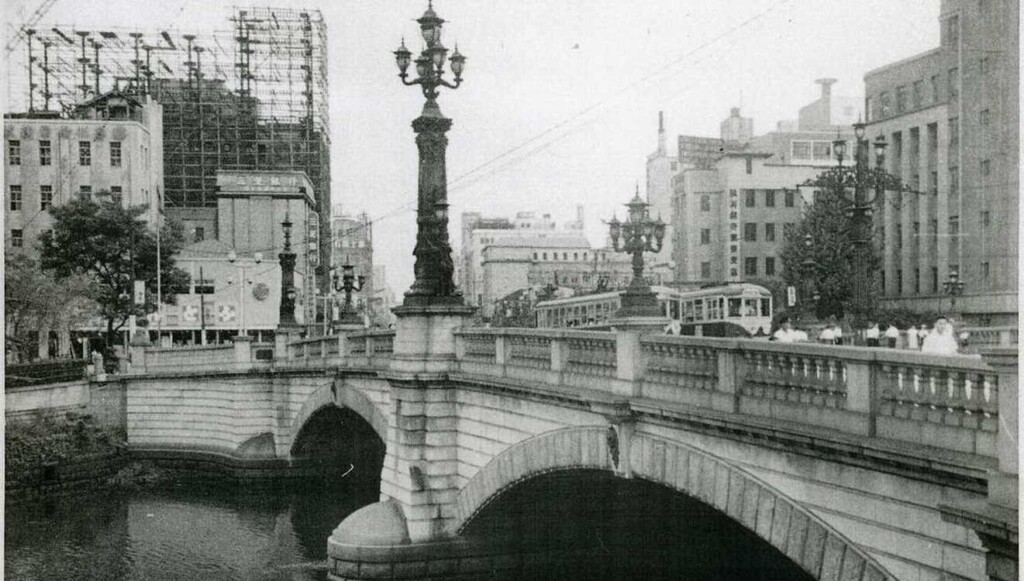 Nihonbashi Bridge before WWII – credit Urbz CC 2.0. via Flickr Nihonbashi Bridge before WWII – credit Urbz CC 2.0. via Flickr24-09-2025, Imagine the outrage if construction of a highway interchange was approved directly overhead of the Brooklyn Bridge—that’s what one Tokyo neighborhood has had to deal with for more than 60 years. The most historic bridge in the city has long been bathed in the shadow and tumult of a concrete overpass, but things are looking up for the Nihonbashi Bridge—literally. 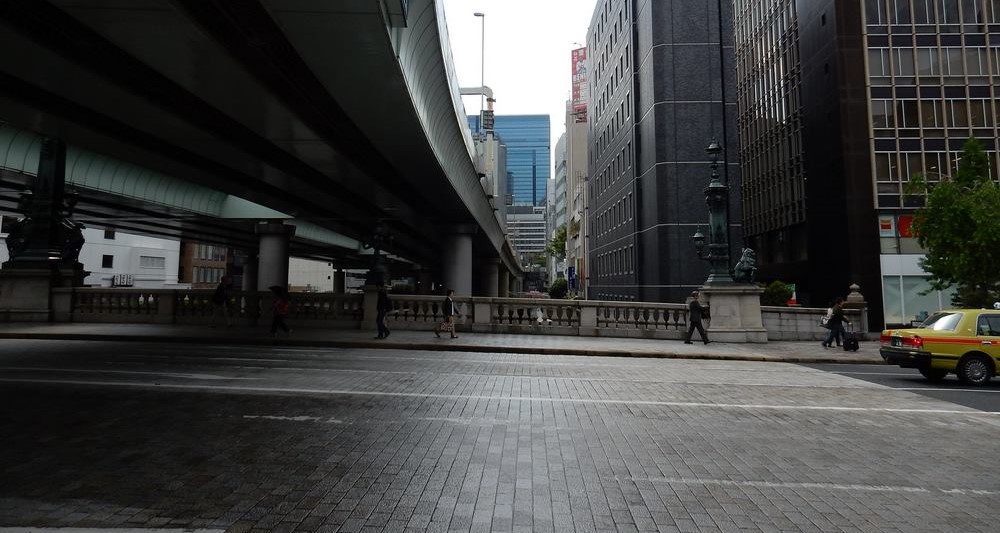 The bridge under the overpass – credit Charles, CC 2.0. via Flickr A coalition of the metropolitan governments is preparing to remove the overpass as part of an urban rejuvenation project. The result will take the area back to the days of the Meiji Restoration, when the bridge was a center of community activity, and a symbol of both progress and order. Construction of Nihonbashi was ordered in 1603 by the shogun Tokugawa Ieyasu, and it was to serve a huge purpose in the future organization of the state. It was considered the first reference node of the entire Japanese national road network at the time. The network consisted of five postal routes which reached from Tokyo—then the prosperous merchant-artist-fishing town called Edo—to the Imperial capital at Kyoto, and four other major provincial capitals. Road signs to and from the locations grew or shrank in distance according to the sign’s distance from Nihonbashi Bridge. It was the point from which all distances in the country were measured, and this collection of digitized postcards and other drawings shows how it and the neighborhood named after it changed over the years. 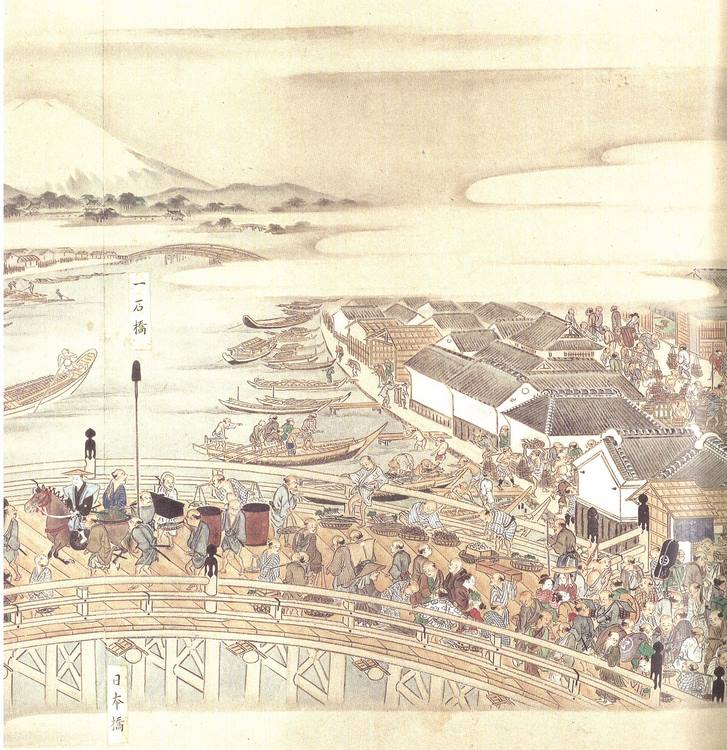 A depiction of the Nihonbashi Bridge during the Edo period – credit, Urbz, CC 2.0. via Flickr Rebuilt in a European style in 1911, it survived all the ravages of World War II, only to be crowded over by the elevated expressway during the hasty modernization of the city in the lead up to the ’64 Summer Olympics. “Historically, Nihonbashi used to be a place where people could look up and see Mount Fuji,” Taneo Nakamura, chairman a local preservation group pushing to remove the overpass, told Japan Times. “Now, you look up and just see concrete.” Nakamura was an executive of a department store chain that had a location near the bridge, and he was there day in and day out while it was being built. “At the time, the river was dirty and the area run-down, so there was excitement about modernization,” he said. “But when it was completed, the structure was lower and darker than anyone had expected. The entire atmosphere of the bridge was lost.” On the current bridge’s centennial year, the Tohoku earthquake struck the city, and the government began reassessing infrastructure on a nationwide scale. Nakamura and other community leaders seized the opportunity to collect signatures on a petition calling for the overpass to be removed, and to bring “light to the river” again. Half a million John Hancocks later, the Tokyo Metropolitan Government, Chuo Ward municipal government, national government, and Metropolitan Expressway, formally submitted a plan for a $2.2 billion rejuvenation project that would see the overpass move underground, and the bridge returned to its place at the center of the community. A hugely sensitive project that will involve tunneling under the river and between subway lines all while redirecting a major traffic artery, it will be coupled with the building of a riverside pedestrian walkway about 0.8 miles long lined with recreation areas. Tunneling is slated for completion by the next decade, and the whole area should be finished by 2040. Historic Tokyo Bridge Liberated from Concrete Overpass Will Shine Again Thanks to Grassroots Campaign |
Kia Motors roadshow in Zunheboto town receives positive response (2025-11-10T13:03:00+05:30)
 Kia Motors officials at Zunheboto town on July 15. (Morung Photo) Kia Motors, which made its debut in the Indian automobile market in August 2019, officially entered the Nagaland market in August 2024 with its dealership located at 6th Mile, near NSC Indian Oil Petrol Pump in Dimapur. As part of its state-wide outreach strategy, the company has been organizing roadshows and promotional campaigns across Nagaland, with a specific focus on engaging potential customers at the district level. One district that has drawn particular attention is Zunheboto, where company officials reported “an overwhelmingly positive response from residents.” Speaking to the media, the team leader from Kia highlighted that customers from Zunheboto have shown keen interest in Kia’s offerings, and reportedly, there have been no complaints or negotiation issues raised so far. “This,” the company stated, “reflects a strong potential market and an encouraging reception for their vehicles in the district.” “Our goal is to provide not just vehicles, but safety, comfort, and convenience. We're pleased to see the level of trust and interest shown by the people of Zunheboto,” the team leader remarked. Kia’s recent promotional efforts include showcasing upcoming models like the Kia Klavis EV, scheduled for launch later this month. While product highlights such as electronic stability control, parking sensors, and ADAS features were part of the demonstration, the broader objective remains to connect with communities across Nagaland. The company's roadshow strategy, according to representatives, “is not just a marketing campaign but also a response to the unique logistical and communication challenges of reaching remote regions.” It was stated that “by visiting districts directly, Kia aims to build trust and offer firsthand interaction with prospective customers.” In addition to vehicle demonstrations, Kia is also promoting “customer-friendly services such as wireless software updates via Kia Connect 2.0, smart access through mobile apps and digital keys, and service support through the MyKia app.” However, the company clarified that “while it offers car exchange services, vehicles from Ford, Renault, and Chevrolet are currently excluded from this policy.”Regarding financing, the team shared that government employees are eligible for a low down-payment scheme subject to salary verification, while in-house financing is available for all customers with proper documentation and a guarantor. Kia Motors roadshow in Zunheboto town receives positive response | MorungExpress | morungexpress.com |
Girl Claims Victory in Campaign to Urge Department Store to Include Pockets in Girls Pants (2025-10-31T13:38:00+05:30)
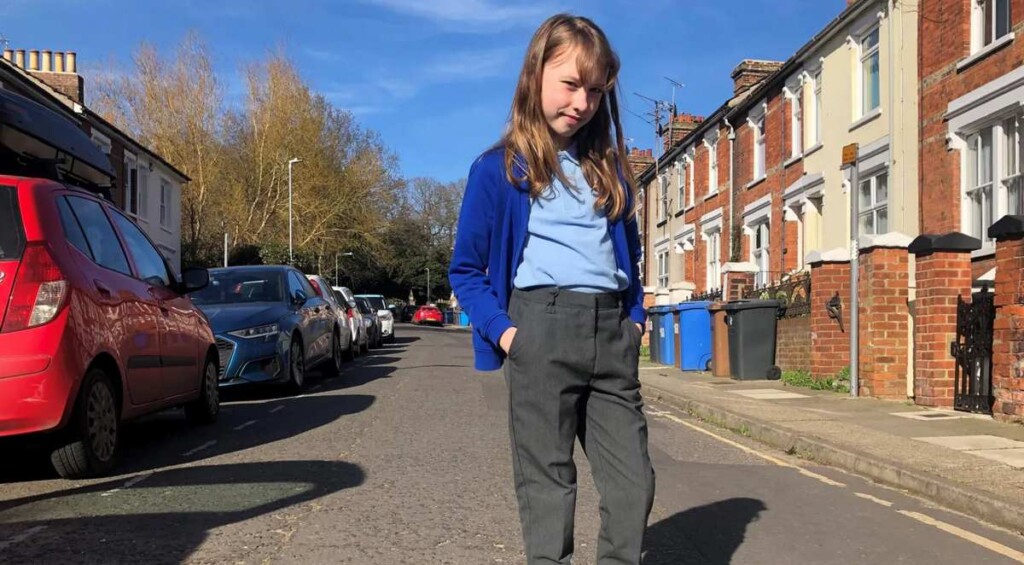 Georgia sporting her new school pants with pockets – credit, family photo Georgia sporting her new school pants with pockets – credit, family photoA young English schoolgirl has claimed victory over the large grocery/home chain Sainsbury’s after she noticed all the girls’ school outfits included pants with no pockets. Arguing “girls need to carry things too!” a letter and petition signed and delivered by her and her classmates last year resulted in a new line of pants with deeper pockets. It started in 2024 when she went shopping at the retail giant with her mom and discovered there were no trouser options for girls that had pockets deep enough to put anything in. Some had pocket linings sewn on and no actual pockets at all. This irked the Ipswich local, and after grabbing a pair of boys’ pants for the school year, she wrote a letter expressing her frustration. “Dear Sainsbury’s,” “Me and my mummy went shopping for trousers for school and we noticed there weren’t any pockets in the girls’ trousers. Girls need to carry things too! When will this change?” She received a reply from corporate management, apologizing for the lack of pockets and agreeing with her that the pants options should include them. The reply added that the feedback would be considered, and that was the end of things. Georgia followed up her letter with a petition signed by 56 students at her school, including boys, but this was not replied to. The next year, returning to Sainsbury’s, she discovered grey trousers with pockets deep to the wrist, and little grey bows sewn onto the front two belt loops. Georgia was delighted. Sainsbury’s didn’t confirm whether the letter or the petition was the key factor in the change, but Georgia decided to take it as a victory. Girl Claims Victory in Campaign to Urge Department Store to Include Pockets in Girls Pants |
Is it finally time to ban junk food advertising? A new bill could improve kids’ health Shutterstock (2025-10-17T12:51:00+05:30)
|
Peter Breadon, Grattan Institute: Today independent MP and former GP Sophie Scamps will introduce a bill into federal parliament that would restrict junk food advertisements aimed at children. The bill would target advertising for unhealthy foods Australia’s health ministers have previously defined, including sugar-sweetened drinks, confectionary and unhealthy fast food meals. Advertising for these foods and drinks would be banned on television, radio and streaming services from 6am to 9.30pm, and banned altogether online and on social media. The proposal highlights one of our biggest health challenges and does something about it. The share of Australian adults who are overweight or obese has tripled since 1980. Today, about a quarter of Australian children are overweight or obese. The consequences are serious. Obesity increases the risk of a range of illnesses, such as diabetes, cancer, and heart disease, setting children up to develop chronic disease. The health care costs of obesity run into the billions of dollars each year, not to mention all the years of life lived with illness and disability, or lost to early death. This isn’t the first time a ban on junk food advertising has been floated. But there is more reason than ever to make it happen. Why now? Unhealthy diets are the main cause of Australia’s obesity epidemic, and restricting advertising for unhealthy foods could help improve what we eat. That’s why experts have been calling for advertising restrictions for years. Back in 2009, the Australian National Preventive Health Agency recommended them, and they have long been recommended by the World Health Organization. They’re supported by evidence that advertising influences children’s diets and preferences, driving cravings and feelings of hunger. Even without this evidence, it would be a safe assumption that junk food advertising works. Otherwise, companies wouldn’t spend money on it, and they certainly do. One study found Australian advertising on sugary drinks alone costs nearly five times more than government campaigns promoting healthy eating, physical activity and obesity prevention. And companies carefully design advertising to entice children. Their strategies include promotional characters, gifts, and games and shifting advertising online to follow changing viewing habits. Most parents don’t need any persuading to know advertising works, having seen younger children employ “pester power” and older children spend their pocket money on unhealthy options. That’s probably one reason two thirds of Australians support bans on junk food advertising during children’s viewing hours. What’s taking so long? So why haven’t governments acted? When health bodies started calling for advertising restrictions nearly 15 years ago, the industry promptly came up with a plan of its own. Optional codes of conduct were drawn up for “responsible advertising and marketing to children”. But there are significant loopholes and gaps in these codes, which are voluntary, narrow, vague, and consequence-free. Predictably, self-regulation hasn’t reduced junk food advertising to children. While countries with mandatory policies have seen junk food consumption fall, it has increased in countries where the industry sets the rules. In the meantime, Australia and its children have been left behind. Since Quebec in Canada introduced the first ban back in 1980, more than a dozen countries around the world have followed and more are planning to. The proposals being debated in our parliament are modelled on policies adopted in the United Kingdom in 2021. This isn’t the only area where Australia has fallen behind when it comes to setting sensible food rules. We are not among the 43 countries with rules to reduce trans-fats, which cause cardiovascular disease, or one of the 85 countries with a tax on sugar-sweetened beverages, which are linked to diabetes. Our policies to reduce salt consumption and improve food labelling are weaker than those in leading countries too. It’s time to make healthy choices easier Unhealthy diets need to improve, but the simple answer of blaming the individual is the wrong one. Unhealthy food choices are shaped by things like time pressures, cost of living pressures, the availability of fresh food and the marketing adults and children are constantly bombarded with. That’s why governments need to make healthy choices cheaper, more convenient and more appealing, so that they can compete with unhealthy options. Taking advertising aimed at children out of the equation would be a good first step.  Peter Breadon, Program Director, Health and Aged Care, Grattan Institute This article is republished from The Conversation under a Creative Commons license. Read the original article. |
‘Beauty with a Purpose’ campaign on digital dignity ends in Zunheboto (2025-10-16T12:26:00+05:30)
 The third phase of the “Beauty with a Purpose” campaign, concluded on September 18 at Immanuel Higher Secondary School. (Morung Photo) The third phase of the “Beauty with a Purpose” campaign, titled She Leads: Power Through Knowledge under the theme Digital Dignity, concluded successfully on Thursday at Immanuel Higher Secondary School here. The campaign was initiated by Alo A Yepthomi, Miss Sumi 2nd Runner-Up 2024, in collaboration with the Sumi Totimi Hoho and Achumi Takumi.  Alo A. Yepthomi, Miss Sumi 2nd Runner-Up . The programme was chaired by teacher Lika A Zhimo and began with an invocation prayer by school chaplain Chingley. Addressing the gathering, Yepthomi spoke on the importance of understanding and upholding digital dignity in the modern age. She highlighted responsibilities that come with sharing information online and cautioned that while everyone has the right to use digital platforms, their use must be guided by mindfulness and respect. She discussed the issue of cyberbullying, saying mocking or gossiping online can cause long-lasting psychological harm. She encouraged students to respect others’ privacy, avoid harmful behaviour, balance screen time, and use reporting tools against abuse.  Kumghavito Achumi.Kumghavito Achumi, graphic designer and founder of Achumi Takumi, gave a presentation on artificial intelligence. He explained its benefits in information processing and decision-making but also flagged concerns of privacy breaches, data leaks, job losses and security threats. He urged the audience to be cautious while using AI-powered tools and to carefully review digital service policies. ‘Beauty with a Purpose’ campaign on digital dignity ends in Zunheboto | MorungExpress | morungexpress.com Kumghavito Achumi.Kumghavito Achumi, graphic designer and founder of Achumi Takumi, gave a presentation on artificial intelligence. He explained its benefits in information processing and decision-making but also flagged concerns of privacy breaches, data leaks, job losses and security threats. He urged the audience to be cautious while using AI-powered tools and to carefully review digital service policies. ‘Beauty with a Purpose’ campaign on digital dignity ends in Zunheboto | MorungExpress | morungexpress.com |
To Help Your Local Wildlife, Stop Raking and Join the 'Leave The Leaves’ Campaign This Autumn (2025-09-30T12:01:00+05:30)
 Rodolfo Mari – Unsplash Rodolfo Mari – UnsplashA wildlife conservation and advocacy group is encouraging Americans this year to take a break from raking and just ‘leave the leaves.’ It’s part of a campaign to try to educate the public on the value of leaf litter to dozens of native wildlife, plant, and fungi species. Raking up these leaves removes valuable habitat and food for the biodiversity that persists on America’s lawns. “Songbirds, small mammals, amphibians, and reptiles all rely on the leaf layer in some way,” explains the National Wildlife Federation, organizers of the Leave the Leaves Pledge. “Many beloved insect species like butterflies, moths, and fireflies use this layer as a safe spot to wait out the winter, and others forage in and even eat the decomposing leaves.” Established by the Pulitzer Prize-winning cartoonist and illustrator of the first Federal Duck Stamp, J.N. Darjeeling, the National Wildlife Federation offers some tips for how to manage dead leaves in the autumn that doesn’t involve removing them entirely from the micro-climate that is your yard. Because a thick leaf layer can damage your grass and make pathways slippery, rake the leaves to other parts of your yard where trees aren’t located. Adding a layer of leaves to your garden beds not only benefits overwintering wildlife, but it can also help suppress weeds and return important nutrients to the soil. Place excess leaves under native trees to provide prime habitat for wildlife. Caterpillars that live in native trees will be looking for a leaf layer to overwinter. Mammals and birds that enjoy the shelter of the tree can also forage in the leaf layer. If you still have leftover leaves and debris, you can pile them up in a corner of your garden and they will break down into an incredible compost for your garden that can be used in the coming seasons. Go beyond leaves by leaving the logs and stems, too. Many insects, like native bees, overwinter inside of hollow dried flower stems or in decaying logs and branches.Helping them doesn’t necessitate leaving your lawn a mess—instead make an ‘insect hotel’ by stacking fallen branches and logs into a natural structure, clearing your yard of debris while creating a more robust haven for invertebrate neighbors. To Help Your Local Wildlife, Stop Raking and Join the 'Leave The Leaves’ Campaign This Autumn |
Village Saves its Phone Booth with Campaign to Make More Calls – and Preserve a ‘Lifeline’ (2025-09-23T11:30:00+05:30)
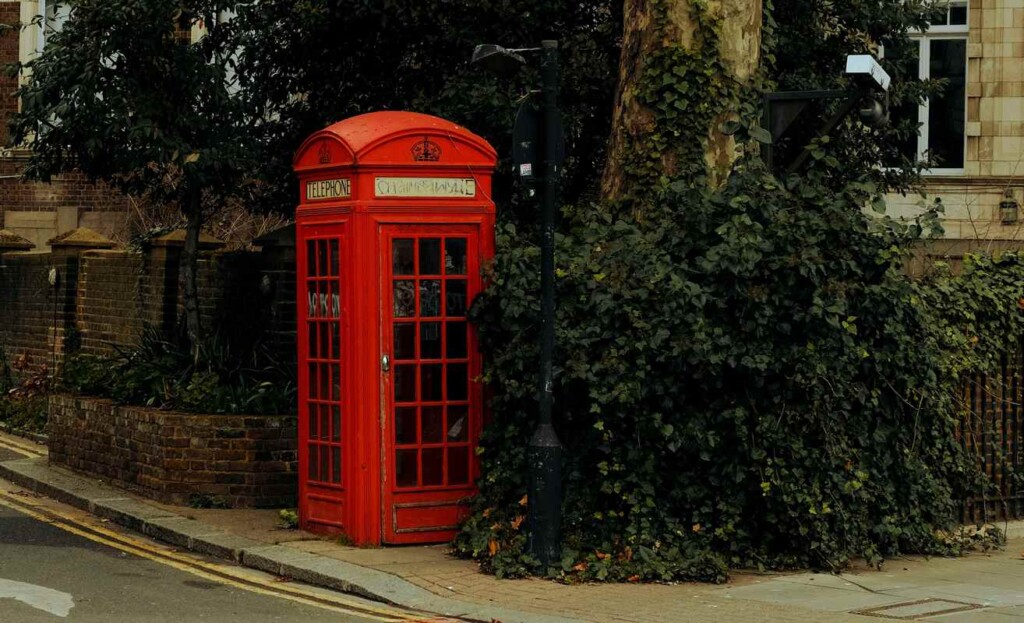 Mathias Reding – via Unsplash+ Mathias Reding – via Unsplash+When non-Britons imagine the classic red phone box, it would seem like the strangest decision ever to get rid of one, charming and iconic as they are. Yet a rural village called Sharrington, in Norfolk, woke up one morning to find a notice on their neighborhood British Telecom phone box saying that not enough calls were being made to justify its continued service. The community then took action, holding a call drive to meet the quota of 52 calls needed for BT to change its mind. “It just goes to show you that communities can achieve incredible things when we stand together to protect what matters to us,” said North Norfolk MP Steffan Aquarone. “The K6 phone box is a lifeline in this small, rural village and, when BT said they were planning to remove it, the whole of Sharrington stood up and said ‘absolutely not’. Calling it a lifeline is no exaggeration, as it had been used last year not only to call 911 (999 in the UK) but also by an ambulance driver to make a call during an emergency when he had no cell reception. On March 15th, residents gathered in the nippy morning air to place enough phone calls from the box to ensure BT kept the lifeline connected, which a spokesperson from the company told BBC was indeed what would happen. “This decision was made due to the poor mobile phone signal in the area and the significant number of calls made from the payphone, highlighting its importance to the community,” the spokesperson said. Local resident Derek Harris said he was “so proud of our community” for standing up and standing together on behalf of what was important to them.“It means everything to me to know that the phone box will still be here long after I’m gone.” Village Saves its Phone Booth with Campaign to Make More Calls – and Preserve a ‘Lifeline’ |
These Silly Signs Are One Man’s Campaign Against His ‘Anti-Fun’ City (2025-09-22T13:16:00+05:30)
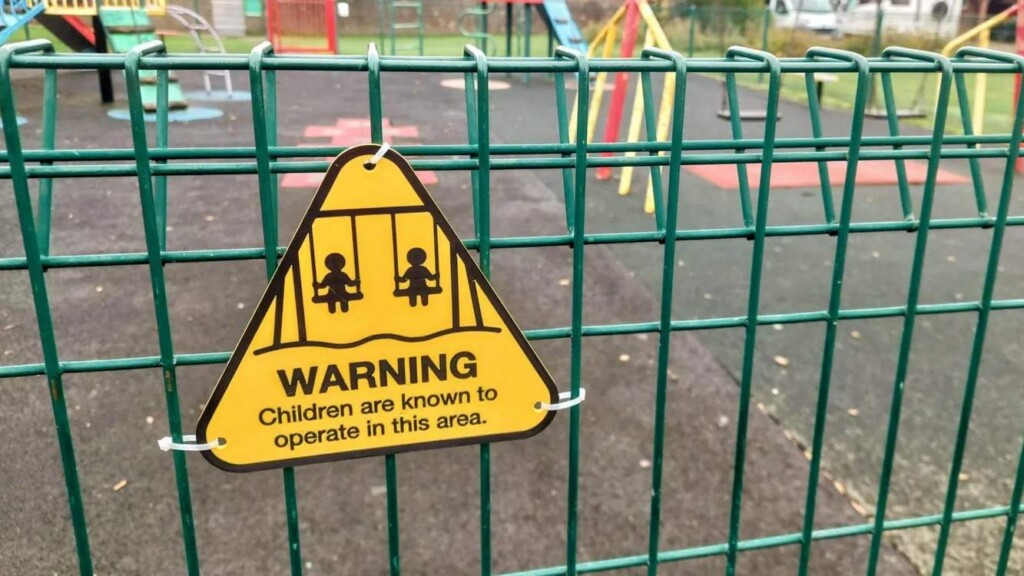 – credit CARP, supplied – credit CARP, suppliedIn a provincial English city, a man has taken it upon himself to address what he referred to as a “fun deficit” in town. By placing humorous signs in the style of public notices and road signs around town, he hopes they will disarm people into seeing issues in a new perspective, whether that’s the fun he focuses on, or poorly managed roads. Chichester is located in West Sussex, and was actually found in one study to be ranked as the best place to live in the historic county. However, the “Chichester Anti-Recreation Partnership” or CARP, as he refers to himself, says there are significant shortfalls in the amount of things that could be construed by any reasonable person as “fun.” “I absolutely adore Chichester,” CARP told the BBC, explaining his modus operandai. “But it does have some notable gaps—particularly when it comes to fun and things for younger people to do.” Attempting to brighten up the place, he has for some months been placing trick signs, noting for example that one was entering a “formal attire only zone” or a “coffee control area” monitored between 5:00 a.m. to 10:00 p.m. “Humor has this unique ability to disarm people—it lowers their defenses and allows them to consider issues from a fresh perspective,” he said. “It reframes problems in a way that’s more approachable and less confrontational, which makes it easier to get your message across and spark discussions.” 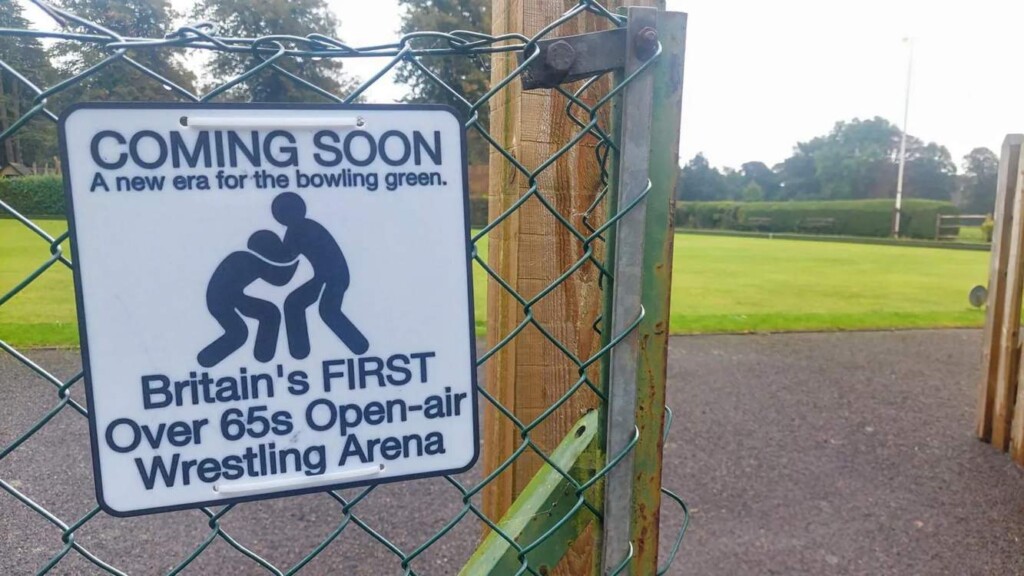 – credit CARP, supplied 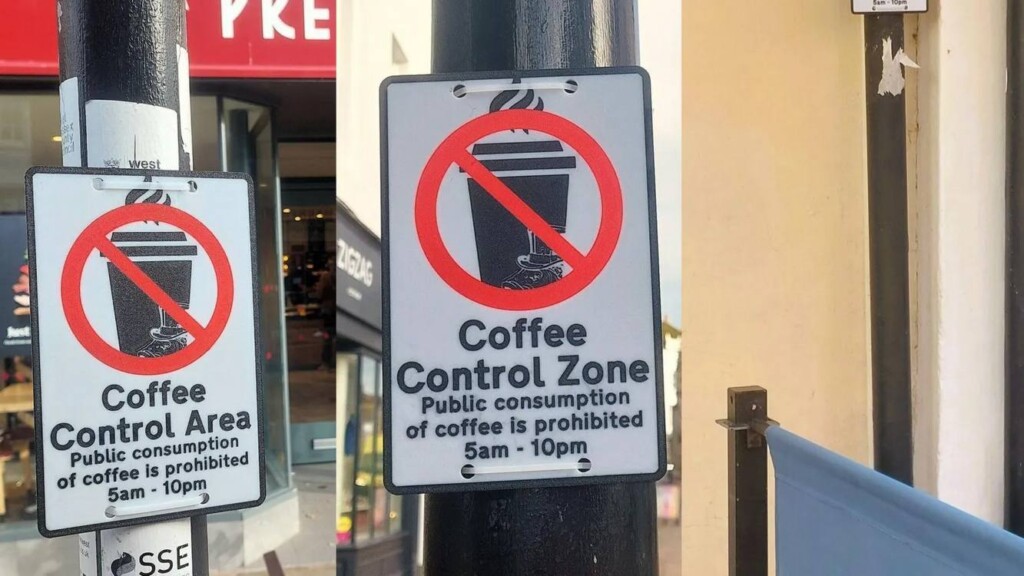 – credit CARP, supplied – credit CARP, suppliedBBC spoke with the Chichester City Council, which “doth protest too much,” one might say. Working hard, they noted, to put on more exciting events for all ages including light shows and concerts after dark, the council said they had been met with appreciation from the citizenry. They currently run an “after dark” working group to collect views on what young people would like to see in the future. Young people are a very important part of the community, they state, again noting a sum of $1.3 million currently earmarked for play area refurbishment. CARP, however, isn’t waiting around. His handiwork gains traction on social media, and even though the council takes his signs down very quickly, they can’t stop him from sharing images of them online.He says he isn’t concerned about what becomes of the signs, so long as they spark a smile, a laugh, a conversation, or, in the best case scenario, action to make Chichester a more fun-focused borough.These Silly Signs Are One Man’s Campaign Against His ‘Anti-Fun’ City |
Florida Man Deploys ‘Subliminal’ Advertising to Incite Happiness Through Viral Sign-Hanging Campaign (2025-09-19T14:03:00+05:30)
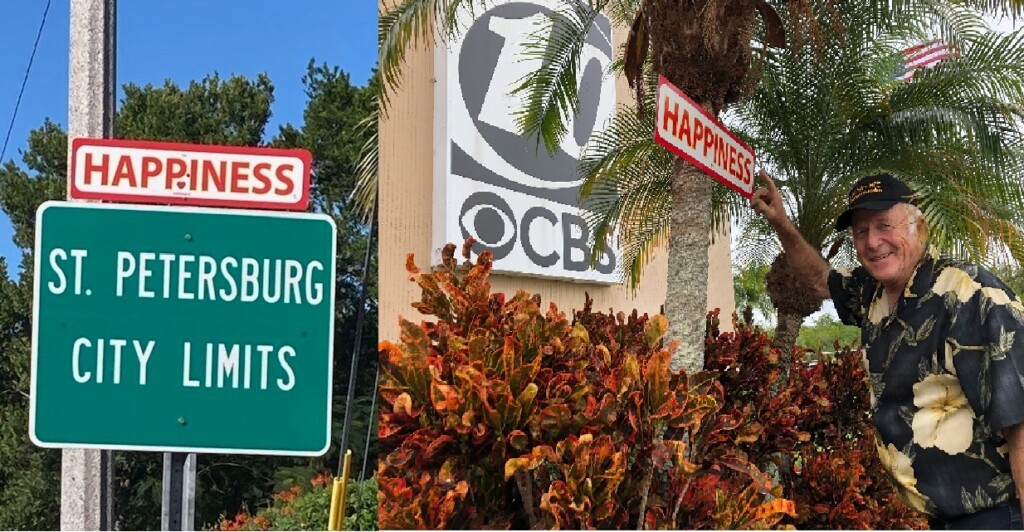 credit – the Happiness Experiment, retrieved from Facebook credit – the Happiness Experiment, retrieved from Facebook“That’s 602,” says Gary King, climbing down from a ladder propped up against a telephone poll, a red and white sign reading “HAPPINESS” newly affixed to its side. “All I’m doing is subliminal experiments using one word, one word. This word has been around forever but where do you see it? You don’t.” King has been hanging metal Happiness signs all over St. Petersburg, Florida, since 2019. It’s all part of The Happiness Experiment, a sociology project to subtly influence the population of his hometown through subliminal advertisement. Profiled in Fox News 13’s “Extraordinary Ordinaries” segment with Walter Allen, King says six proven sociological effects go into his work, the most powerful of which is what advertising companies have done for a century. By putting their logos everywhere, their products remain at the front of your mind. But what if instead of selling soft drinks or fast food, the goal of that advertisement was to put a smile on your face? That’s King’s mission. But as joyful as Gary King may seem driving around his home in his F150 wearing his official Happiness Experiment t-shirt and ballcap, the crucible of this happy work was the darkest depths of despair. In 2012, his son Brian took his own life, leading King into a spiral of unhappiness that almost resulted in him doing the same. The Happiness Experiment’s first test subject was none other than King himself. Today, King revels in messages received from Floridians who see the signs all over Florida and are affected by them. “I first saw the happiness experiment TB signs on the day of my miscarriage last year. The signs reminded me that it was all going to be okay, and that I could find happiness during and after this,” read a letter he received. In another letter, a woman bearing the burden of severe bipolar disorder almost ended her life—from the edge of the very same bridge King’s son Brian used to end his. But on her way there she saw one of the Happiness signs and turned around with fresh perspective. Perhaps that’s why King said the greatest gift he ever received was his suffering. Florida Man Deploys ‘Subliminal’ Advertising to Incite Happiness Through Viral Sign-Hanging Campaign |
Nagaland joins nation in celebrating Poshan Maah 2025 (2025-09-18T11:16:00+05:30)
 Kohima, 18-09-2025 (MExN): The Department of Social Welfare, Government of Nagaland, through the State Project Management Unit (SPMU) under Poshan Abhiyaan, will officially launch the month-long nationwide celebration of Poshan Maah 2025 from September 17 to October 16. Since its inception in 2018, Poshan Maah has grown into one of the largest people’s movements on nutrition in India, with millions of activities conducted annually across every state and district. It has become a cornerstone of the Government of India’s flagship Poshan Abhiyaan (National Nutrition Mission), engaging Anganwadi workers, ASHAs, schools, local bodies, frontline departments, NGOs, and communities. Over the years, the celebration has significantly raised awareness on nutrition, health, hygiene, and the importance of community-led action in building a malnutrition-free India. Preparing for the launch of Poshan Maah 2025, Olemjungla Aier, Joint Secretary & Project Director of Poshan Abhiyaan, Nagaland stated “Poshan Maah has become a nationwide Jan Andolan that unites government departments, communities, and families in the fight against malnutrition. In Nagaland, we are committed to blending traditional food practices and community strengths with this national effort to ensure healthier mothers, stronger children, and a nourished future for all, she stated. The Department of Social Welfare called upon every citizen of Nagaland to actively participate in Poshan Maah 2025, reinforcing the vision of a Suposhit Bharat-Nourished India. Poshan Maah 2025 – Focus areas This year, five key themes have been identified nationwide, which Nagaland is also observing through community-based activities, workshops, rallies, and awareness drives: (1) Addressing Obesity- Reducing excess sugar and oil consumption, promoting balanced diets, and growth monitoring of children. (2) Early Childhood Care & Education (ECCE)- Poshan Bhi Padhai Bhi-Strengthening pre-school education through storytelling, play-based learning, and parental engagement. (3) Ek Ped Maa Ke Naam- A green initiative encouraging tree plantation, nutrition gardens (Poshan Vatikas), and eco-friendly practices. (4) Infant and Young Child Feeding (IYCF) – Promoting exclusive breastfeeding, complementary feeding, hygiene, and anemia prevention.(5) Men-Streaming- Actively engaging men as caregivers and nutrition champions to support family health and well-being. Convergence in action One of the unique strengths of Poshan Maah is the multi-departmental convergence approach. In Nagaland, the celebration is being carried out jointly by the Departments of Social Welfare, Health & Family Welfare, School Education, NSRLM-Rural Development, Agriculture, Horticulture, Forest, Environment & Climate Change, and AYUSH, along with the active involvement of local bodies, community organizations, and village councils. This convergence ensures that health services (growth monitoring, anemia screening, IYCF counseling) are combined with education initiatives (ECCE workshops, school rallies), agriculture and horticulture departments promote Poshan Vatikas and kitchen gardens to strengthen food security, environment and forest departments support plantation drives under Ek Ped Maa Ke Naam, community participation is fostered through the involvement of traditional leaders, SHGs, schools, and youth groups. This integrated effort reflects the spirit of Jan Andolan (People’s Movement), making nutrition everyone’s responsibility. Nagaland’s statewide campaign In Nagaland, the campaign is being implemented across all districts with activities such as: Launching ceremonies with Poshan Pledges and community engagement, growth monitoring of ICDS beneficiaries, ECCE workshops and community-based events showcasing indigenous toys and folktales, tree plantation drives, Poshan Rallies, and the setting up of kitchen gardens, Anemia camps, IYCF counseling sessions, and food demonstrations using local ingredients, men-focused workshops and Suposhan Diwas to involve fathers and youth in child nutrition and closing ceremonies recognizing the best-performing functionaries. This was stated in a release issued by State Project Management Unit (SPMU), Poshan Abhiyaan, Department of Social Welfare, Government of Nagaland. Nagaland joins nation in celebrating Poshan Maah 2025 | MorungExpress | morungexpress.com |
Vicky Kaushal turns rockstar, Rashmika Mandanna dons' chef avatar for their latest collaboration (2025-08-22T13:18:00+05:30)
 IANS (Source: PR) IANS (Source: PR)Mumbai, August 22 (IANS) Vicky Kaushal and Rashmika Mandanna have once again joined forces for an advertisement. Vicky swings between two extremes: a flamboyant rockstar brimming with energy and a royal avatar radiating old-world charm. On the other hand, Rashmika is seen as a grounded yet commanding politician in her first avatar and a spirited chef in the other. Along with Vicky and Rashmika, the campaign will also see Ranvir Shorey, Murali Sharma, Seema Pahwa, and Javed Jaffrey. Speaking about his latest project, Vicky said: “I am thrilled to continue my association with Birla Opus Paints for this groundbreaking campaign. ‘Birla Opus Assurance’ is a bold move that I believe will resonate deeply with homeowners, and I enjoyed conveying and bringing this to life on screen.” Rashmika added, “I have always believed in making choices that offer both quality and reliability. Birla Opus Paints’ ‘Assurance’ campaign reflects this very belief. I am delighted to be a part of such an initiative for a brand like Birla Opus Paints.” Refreshing your memory, Vicky and Rashmika were seen sharing screen together in Laxman Utekar's historical drama, "Chhaava". An adaptation of the Marathi novel Chhava by Shivaji Sawant, the drama saw Vicky in the titular role of Chhatrapati Sambhaji Maharaj, whereas Rashmika played his better half, Yesubai Bhonsale. Talking about playing the Maratha emperor, Vicky claimed that he poured his heart into every moment of "Chhaava". “It’s an honour to bring the legacy of Chhatrapati Sambhaji Maharaj into every home. Chhaava has been a journey of courage and pride, and I poured my heart into every moment", he shared.Shedding light on her experience, the 'Pushpa' actress said: "Playing Maharani Yesubai in 'Chhaava' was an honour for me. She was a woman of immense strength, grace, and resilience, a true pillar beside Chhatrapati Sambhaji Maharaj. Bringing her story to the screen, especially in such a monumental historical drama, has been truly special.” Vicky Kaushal turns rockstar, Rashmika Mandanna dons' chef avatar for their latest collaboration | MorungExpress | morungexpress.com |
ESIC NE organises mega awareness, outreach & health camp in Dimapur (2025-08-14T13:26:00+05:30)
 Attendees of the ‘Mega Awareness-cum-Outreach and Preventive Health Check-up Camp’ organised by Employees’ State Insurance Corporation (ESIC), North-East Regional Office on August 12 in Dimapur. (Photo Courtesy: ESIC NE Office) Dimapur, August 14 (MExN): The Employees’ State Insurance Corporation (ESIC), North-East Regional Office, organised a ‘Mega Awareness-cum-Outreach and Preventive Health Check-up Camp’ in Dimapur on August 12 aimed at promoting awareness of the ESI Scheme and its benefits among stakeholders, employers, employees, and beneficiaries. Gracing the event, Chief Guest, Pranay Sinha, Insurance Commissioner (NE Zone), highlighted two key initiatives during the event. The first was SPREE 2025 (Scheme for Promotion of Registration of Employers and Employees), approved at the 196th ESI Corporation meeting chaired by Union Minister Dr Mansukh Mandaviya. Running from July 1 to December 31, 2025, the scheme offers a one-time opportunity for unregistered employers and employees, including contractual and temporary workers, to enrol under the ESI Scheme without the risk of inspections or penalties for past dues. The second was the Amnesty Scheme 2025, which will be in effect from October 1, 2025, to September 30, 2026. This scheme aims to resolve long-standing disputes, particularly those involving interest and damages, and empowers Regional Directors to withdraw cases once dues are cleared—thereby reducing the legal burden on employers Meanwhile, ESIC NE Regional Director Robert L Guite informed that the ESI Scheme is currently operational in eight Nagaland districts namely Dimapur, Kohima, Mokokchung, Chumukedima, Niuland, Tseminyu, Wokha, and Zunheboto. It covers 4630 insured persons and benefiting over 17,965 people. At the event, Avile Vitso, CEO of ESI Scheme, Nagaland, explained the scheme’s benefits, tie-up arrangements, and procedures for availing services. The programme provided a platform for knowledge sharing, grievance redressal, and feedback to improve service delivery, informed a press release from the regional office. The event saw active participation from employers, employees, and representatives of various employers’ associations and workers’ unions in large number, it added. |

Kia Motors roadshow in Zunheboto town receives positive response (2025-07-30T11:43:00+05:30)
 Zunheboto : Kia Motors, which made its debut in the Indian automobile market in August 2019, officially entered the Nagaland market in August 2024 with its dealership located at 6th Mile, near NSC Indian Oil Petrol Pump in Dimapur. As part of its state-wide outreach strategy, the company has been organizing roadshows and promotional campaigns across Nagaland, with a specific focus on engaging potential customers at the district level. One district that has drawn particular attention is Zunheboto, where company officials reported “an overwhelmingly positive response from residents.” Speaking to the media, the team leader from Kia highlighted that customers from Zunheboto have shown keen interest in Kia’s offerings, and reportedly, there have been no complaints or negotiation issues raised so far. “This,” the company stated, “reflects a strong potential market and an encouraging reception for their vehicles in the district.” “Our goal is to provide not just vehicles, but safety, comfort, and convenience. We're pleased to see the level of trust and interest shown by the people of Zunheboto,” the team leader remarked. Kia’s recent promotional efforts include showcasing upcoming models like the Kia Klavis EV, scheduled for launch later this month. While product highlights such as electronic stability control, parking sensors, and ADAS features were part of the demonstration, the broader objective remains to connect with communities across Nagaland. The company's roadshow strategy, according to representatives, “is not just a marketing campaign but also a response to the unique logistical and communication challenges of reaching remote regions.” It was stated that “by visiting districts directly, Kia aims to build trust and offer firsthand interaction with prospective customers.” In addition to vehicle demonstrations, Kia is also promoting “customer-friendly services such as wireless software updates via Kia Connect 2.0, smart access through mobile apps and digital keys, and service support through the MyKia app.” However, the company clarified that “while it offers car exchange services, vehicles from Ford, Renault, and Chevrolet are currently excluded from this policy.”Regarding financing, the team shared that government employees are eligible for a low down-payment scheme subject to salary verification, while in-house financing is available for all customers with proper documentation and a guarantor. Kia Motors roadshow in Zunheboto town receives positive response | MorungExpress | morungexpress.com |
How advertising can repurpose itself to serve cities in more sustainable ways (2025-05-29T12:34:00+05:30)
 Domino’s Paving for Pizza campaign shrewdly combines promotion of its product with meeting a public need to have potholes repaired. Domino's Pizza
Sergio Brodsky, RMIT University Domino’s Paving for Pizza campaign shrewdly combines promotion of its product with meeting a public need to have potholes repaired. Domino's Pizza
Sergio Brodsky, RMIT UniversityNoisy, ugly and dirty. Advertising has polluted cities, annoyed consumers, and jeopardised its own existence. Beyond a mass-media cacophony, brand communications’ significant carbon footprint and runaway consumption are certainly contributing to what economists call market failure. 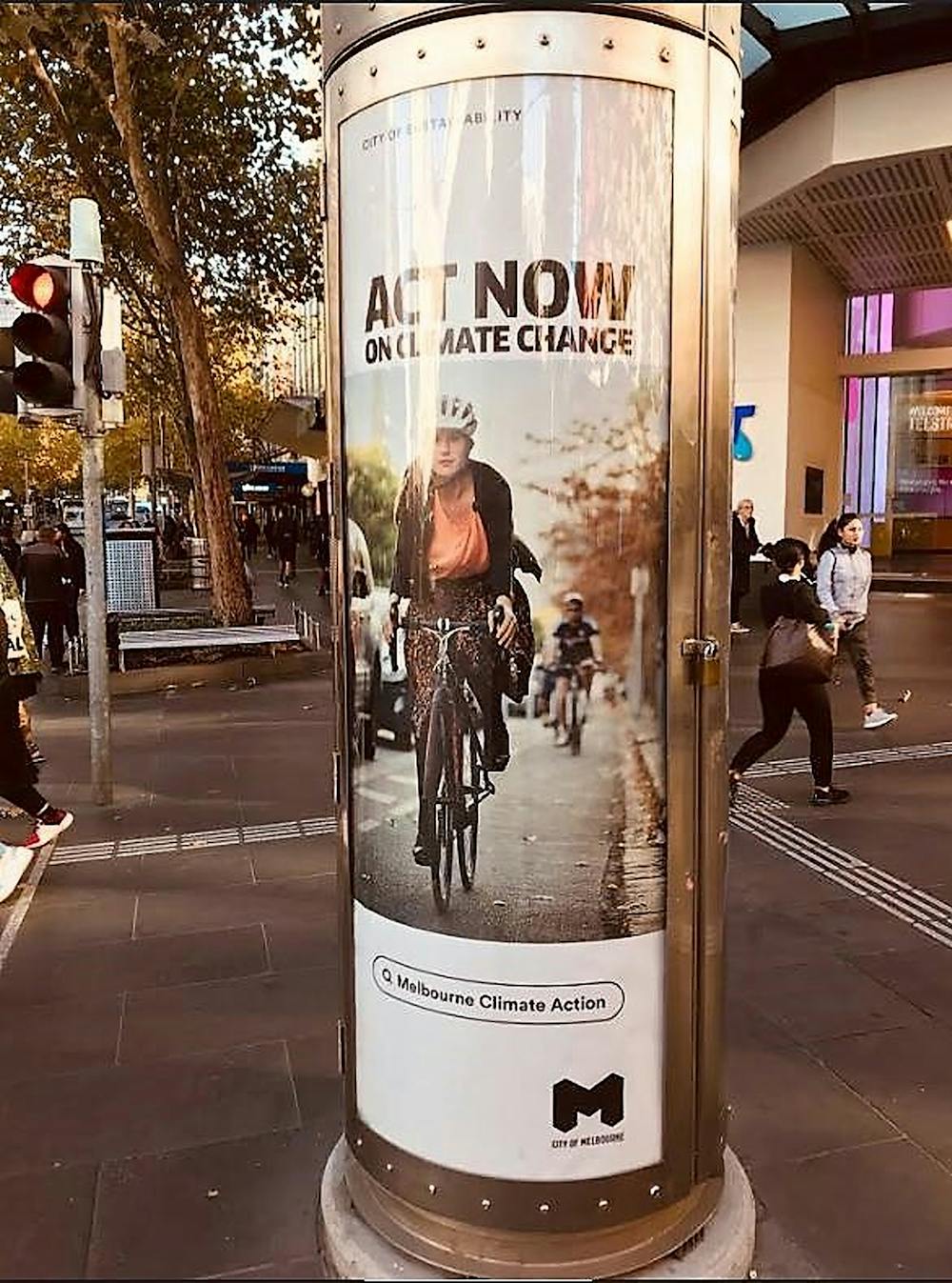 Advertising, even when not promoting consumption, creates an environmental cost because of its emissions. Author provided Advertising, even when not promoting consumption, creates an environmental cost because of its emissions. Author providedIn the UK, for instance, advertising produces 2 million tonnes of carbon dioxide emissions a year. That’s equivalent to heating 364,000 UK homes for a year, according to CarbonTrack. In this sense, should messages such as a City of Melbourne campaign inviting people to cycle more even be allowed? On the one hand, it is better to communicate a solution (cycling) to the issue than not. On the other, if the communication contributes to the problem more than the solution, what’s the point of it? Jerry Seinfeld’s 2014 infamous line at the Clio awards called out the advertising sector to its face:
Still, contrary to that sentiment, marketers and their brands can (and should) move away from being part of the problem to becoming part of the solution for sustainable development and the industry’s own sustainability. Offering a new outlookThe urbanisation megatrend wholly underpins other forces shaping the way we live, now and in the future. Although cities occupy only 2% of Earth’s landmass, that is where 75% of energy consumption occurs. Advertising growth is also concentrated in big cities. Because of increased demand for ever more comfortable lifestyles, urban infrastructures have been feeling “growing pains” for decades now. Whether it’s energy, education, health, waste management or safety, cities’ services are struggling to keep up with their larger and “hungrier” populations. The strategic opportunity here is to reframe brand communications from the promotion of conspicuous consumption to becoming a regenerative force in the economy of cities. That means using brands’ touch points as more than mere messengers, but rather delivering public utility services. I’ve coined it Urban Brand-Utility. For example, Domino’s Pizza’s Paving for Pizza program fixes potholes, cracks and bumps said to be responsible for “irreversible damage” to pizzas during the drive home. This may sound silly, but the US National Surface Transportation Policy and Revenue Study Commission estimates that simply to maintain the nation’s highways, roads and bridges requires investment by all levels of government of US$185 billion a year for the next 50 years. Today, the US invests about US$68 billion a year. 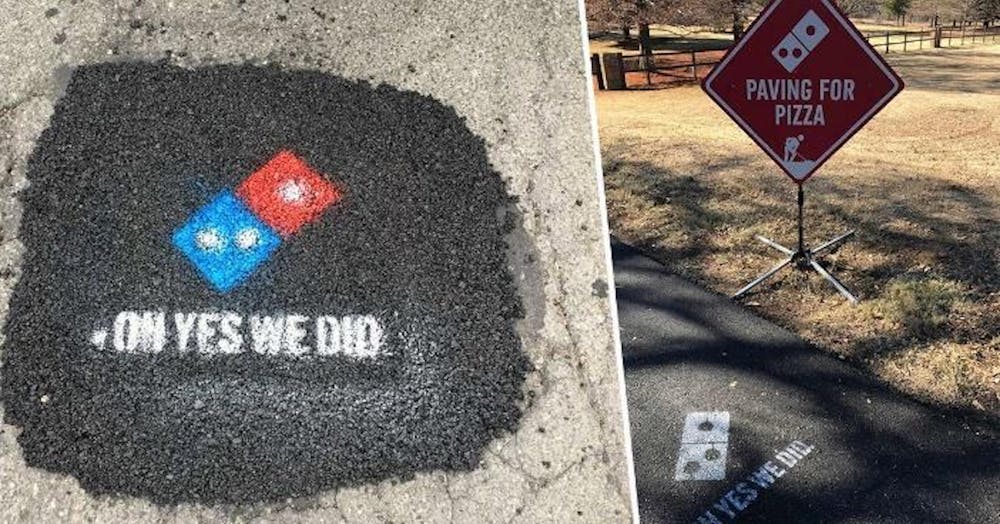 The Paving for Pizza program fixes potholes that Domino’s says ‘can cause irreversible damage to your pizza during the drive home’. Domino's Pizza The Paving for Pizza program fixes potholes that Domino’s says ‘can cause irreversible damage to your pizza during the drive home’. Domino's PizzaAccording to Bill Scherer, mayor of Bartonville, Texas: “This unique, innovative partnership allowed the town of Bartonville to accomplish more potholes repairs.” Eric Norenberg, city manager of Milford, Delaware, said: “We appreciated the extra Paving for Pizza funds to stretch our street repair budget as we addressed more potholes than usual.” In Moscow, major Russian real estate developers approached Sberbank to collaborate on better infrastructure planning in residential areas. People’s opinions on local needs fuelled targeted campaigns, promoting loans for small businesses. The “Neighbourhoods” campaign generated nine times as many small-business responses as traditional bank loan advertising. In other words, people had their needs met. And neighbourhoods become more attractive as a result. The city increases tax collection from the new businesses being set up, which also reduces the costs of having to deal with derelict areas. A shift to serving citizen-consumersIf we could see ourselves as citizen-consumers, as opposed to individual shoppers in the market, every dollar spent would enable business to tackle the issues that matter most. Here’s a hypothetical situation. Let’s assume Domino’s Paving for Pizza program is taken to its full potential, generating a large surplus to the City of Bartonville by minimising the costs of repairing potholes. Rather than treating this as a one-off campaign, smart mayors would try to create a virtuous cycle, where the city retains 50% of the surplus, 25% is returned to the advertiser, and 25% goes to the agency and media owner – a value only unlocked by repeating the approach. This way, marketing budgets are effectively turned into investment funds. The returns are in the form of brand cut-through, happier customers, social impact and more effective city management, as shown in the model below. 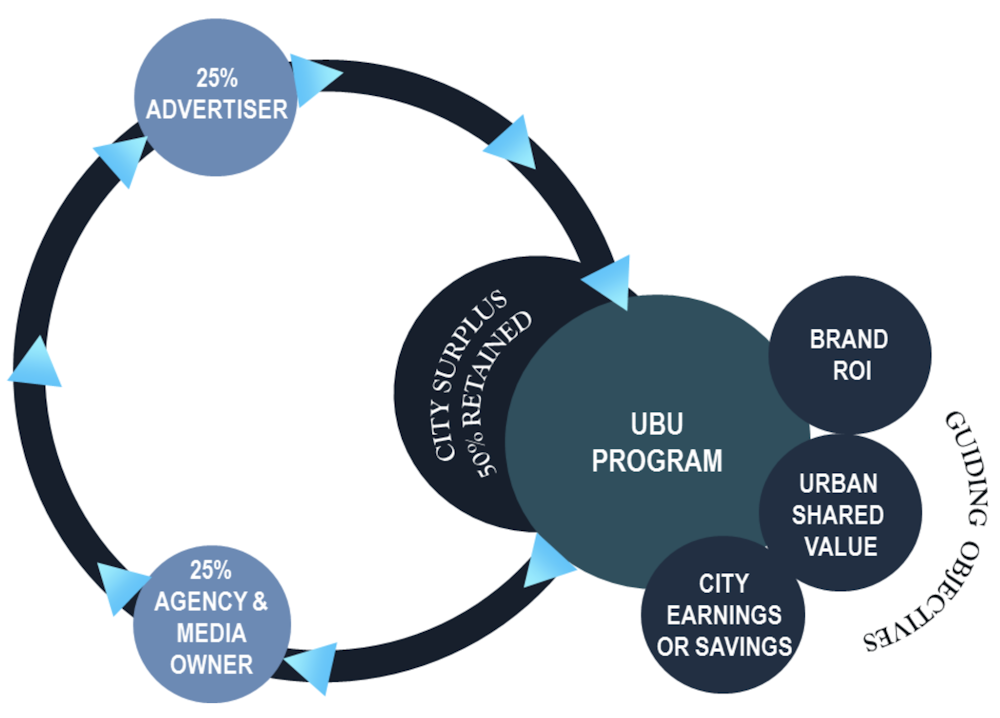 Author provided Author providedIn a circular economy, products and services go beyond an end user’s finite life cycle. Similarly, Urban Brand-Utility looks at brand communications as closed loops by designing a system bigger than fixed campaign periods, target audiences and business-as-usual KPIs. Brands with some level of foresight will be able to broaden their audiences from customers to citizens and their revenue model from sales to the creation of shared value. These will be game-changers for profit and prosperity. Markets, choice and competition are not just a consumer’s best friend, but their civic representation. After all, as one of the tribunes asks the crowd in Shakespeare’s Coriolanus: “What is the city but the people?” Sergio Brodsky, Sessional Lecturer, Marketing, RMIT University This article is republished from The Conversation under a Creative Commons license. Read the original article. |
