New Delhi, (IANS): The Centre's Department for Promotion of Industry and Internal Trade (DPIIT), Ministry of Commerce and Industry has notified the expansion of the Credit Guarantee Scheme for Startups (CGSS) which increases the ceiling on guarantee cover per borrower from Rs 10 crore to Rs 20 crore. The extent of guarantee cover provided has also been increased to 85 per cent of the amount in default for loan amounts up to Rs 10 crore and 75 per cent of the amount in default for loan amounts exceeding Rs 10 crore, according to an official statement issued on Friday. Further, the Annual Guarantee Fee (AGF) for startups in 27 Champion Sectors has been reduced to 1 per cent p.a. from 2 per cent p.a. The Champion Sectors have been identified by the Government under 'Make in India' to provide a thrust to India's manufacturing and service capabilities. The reduction in AGF for Champion Sectors will make funding more attractive for the identified sectors and boost innovation in domestic manufacturing and self-reliance. In line with Prime Minister Narendra Modi's vision for transforming India into an innovation-driven self-reliant economy, the notified expansions aim to address the financing needs of innovation-driven startups. As a result of the increased guarantee support and coverage, the number of financial institutions coming forward to provide credit support to startups will increase, thereby increasing overall fund flow for startups. The expanded scheme will further reduce the perceived risks associated with lending to startups in established financial institutions, enabling greater financial flow and runway for startups to undertake research and development (R&D), experimentation, and create cutting-edge innovation and technologies. Several operational reforms and other enabling measures identified through consultations with the startup ecosystem have also been included in the expanded CGSS to make the scheme attractive for lenders and startups seeking funding support. The expansions and modifications are expected to give thrust to the Scheme and enable a wider range of startups to benefit to propel the country towards becoming a 'Viksit Bharat'. Prime Minister Modi launched the Startup India initiative along with an Action Plan for Startups on January 16, 2016, to create a vibrant startup ecosystem in the country. In line with the Action Plan for startups, the Government approved and notified the 'Credit Guarantee Scheme for Startups (CGSS)' on October 6, 2022, to provide guarantee up to a specified limit against credit instruments extended to startups by scheduled commercial banks, All India Financial Institutions (AIFI), Non-Banking Financial Companies and Securities and Exchange Board of India (SEBI) registered Alternative Investment Funds (AIFs). The broad objective of CGSS is to finance eligible startups by enabling collateral-free debt funding to startups through avenues such as working capital, term loans, and venture debt.To further catalyse entrepreneurship by providing enhanced credit support to innovators and encouraging financial institutions in the ecosystem to provide early-stage debt funds to startups, the Union Budget 2025-26 proposed the enhancement of credit availability with guarantee cover for startups. Govt notifies expansion of Credit Guarantee Scheme for Startups | MorungExpress | morungexpress.com |
The three things universities must do to survive disruption (2025-05-20T13:33:00+05:30)
This essay is part of a series of articles on the future of education. The nature of global communication (for better and worse) has changed. Virtually all young people in Australia spend an average of nine hours a day online and about three hours of that interacting on social media. That means they spend more time online than sleeping. Smartphones and smart technologies are our personal assistants with diary, shopping, research, translation, social and telecommunications capabilities all a swipe away. As you read this, or have Siri read it to you, people are solving problems, writing music, dating, visiting a tele-nurse and conducting business – all online. It is the new normal. Meanwhile, massive open online courses (MOOCs) offer tens of thousands of opportunities for people to be exposed to the best researchers, practitioners and university talent in the world. MOOCs are one example of our interconnected world, which allows expertise to be universal and accessible – anyone can learn what they want, where they want, when they want and how they want. If you want to study psychology, master computer coding or complete an MBA, why would you pay big fees to a large university to support its infrastructure costs and hear someone lecture in a huge hall, when you could watch the world’s best experts from the comfort of your apartment or on your phone, wherever you are? To remain relevant, Australia’s universities will need to transform into very different entities, with new business models that foster innovation and embrace the interconnection technology offers. And they will need to do so quickly. The old university model is becoming obsoleteThe American business academic Clayton M. Christensen used the term “disruption” to discuss the implications of the massive changes to the student base of universities. He likened the situation to how discount stores such as Target disrupted the business models of department stores like Myer and David Jones, capturing an increasing chunk of middle-class spending on everyday personal and household goods. Christensen challenged universities not to be like the big steel mills that are mostly relics of the past. Similarly, US scholar Cathy N. Davidson has urged universities to abandon generic degrees and impersonal forms of teaching, to make university education more accessible and relevant. In most university programs, a student completes courses in large facilities at mandated times. In the first year of many degrees, learning is primarily passive and assessment is typically in the form of easily marked exams. The current university funding model is mainly based on the assumption completing multi-year undergraduate and postgraduate coursework degrees, broken into semesters or terms of 10-15 weeks, is still a relevant measure of learning. This mode of “seat time” as learning is becoming obsolete. Learning in courses made of short chunks, certificates, or micro-credentialled mini units of study is growing as the preferred method for this generation of students and industry. Some will say Australian universities are already on it, with innovation hubs, new academic products including micro-credentials and increasingly online delivery. But these features are generally bolted on to the status-quo funding model, based on teaching the first year of a program cheaply to drive profit that can be spent on more engagement-oriented upper-level courses, and to support research and infrastructure.
These pop-up innovations are mostly used to drive the marketing of university brands and promote reputations rather than as sustainable ways of doing business. They are mostly loss leaders, similar to sales at your local supermarket. What are the three pillars of a future-focused university?With a population of 25 million people, does Australia need 40-plus universities? Probably not if it means 40-plus big stores whose business models require mass lectures in the first year, bolstered by increasing international student enrolments to fund high infrastructure and staffing costs. But there is a bright future ahead if universities redefine themselves beyond the rhetoric of value propositions and marketing schtick, and fully embrace the below three key pillars: 1. Promote engagement and impact Virtually every academic program should be formatted to embrace new ways of learning. Students of any short course, module, certificate or degree should have meaningful opportunities to do real work for real purposes as part of their experience. Students should learn by doing and learning should connect theory with practice. While this seems obvious in nursing and teaching, it is just as critical in English or biology. Likewise, assessment should primarily be for learning more than of learning. 2. Enhance humanity
The complexities of interconnection are leading us quickly toward a machine-based world. Decisions we make about our future interconnections will not just be about driverless cars, but about handing over moral decisions to smart tools. To preserve humanity, our STEM-focused career tracks should embed multiple opportunities to integrate ethics, history, arts, philosophy and morality. 3. Expand student access To this point, most universities have been sorting institutions. High marks and test scores from school leavers have equalled access and opportunity. Yet, high failure rates in first year driven by poor assessments lead to a large exodus of students. With lifelong learning required for all of us to stay flexible both intellectually and professionally, we must shift our attention to opportunity, knowledge promotion, and flexible entry and access points for the new-fangled chunks of learning experiences we offer. Maintaining high expectations, rooted in fairness and widening opportunity coupled with flexible designs, will be a challenge for large universities that pride themselves on accepting high-ranking students, or that assume entrance requirements such as the Australian Tertiary Admissions Rank (ATAR) are predictors of future success in the interconnected world. Universities must change their KPIsUniversity leaders use metrics such as key performance indicators (KPIs) to evaluate their performance. KPIs can be counting the numbers of website hits, noting the number of students who complete the first month of a new semester, or increasing the number of international applications. Each faculty and supporting division at each campus will need new key performance indicators (future-focused KPIs) to launch the transformation necessary to rethink learning outcomes: Prepare for an interconnected world Most future life and work will be housed in interconnectedness locally, nationally and internationally. For our younger students it already is. Become transdisciplinary experts Most knowledge does not reside in separate disciplines as we have typically chunked them in universities. Instead, experiences should cross the dotted lines of discipline and expertise, mixing the arts and sciences in truly human ways. Be life-ready more than work-ready Unlike in the past, most of us will shift our career paths multiple times across our lives. University experiences should provide multiple opportunities for takeaways that help graduates of programs of whatever duration be nimble and continue to learn. Promote well-being Most universities provide multiple reactionary systems for students in crisis, but they do little to frontload well-being and mental-health support into their formal offerings. Our lack of effective self-care threatens our day-to-day human health and happiness. We often succumb to the stressors of modern life because we don’t proactively address social, emotional and physical well-being as part of our formal learning to prepare for life’s challenges. Change ‘seat time’ as the default learning measurement As we shift to flexible learning formats and durations, seat time in lectures and tutorials will no longer effectively determine completion. Learning will. Semesters of 15 weeks will be replaced with personalised learning on demand. This is already the norm in military education and corporate training. Share expertise across the world Faculties will merge forces to share talent in creative ways, not for financial efficiency but to provide learners with access to the best and most knowledgeable teachers and scholars in the world. Mediocre offerings will be replaced by gold-standard teaching and learning, allowing local staff to support student engagement and impact while promoting excellence and equity. Embrace smart tools Smart tools and mixed-reality learning experiences will make the lecture model nearly redundant. Artificial intelligence and virtual reality systems, which continue to grow in sophistication, will render didactic teaching irrelevant. Smart tools can personalise learning in dynamic, interactive ways across all disciplines. These systems will require infrastructure to support them. Picture lecture halls refurbished as engaged learning centres for artificial intelligence platforms, with smart tutors and mixed-reality experiences. Over the next few years there will likely be mergers and closures across the university sector in response to the multiple disruptions facing tertiary education. Meanwhile, every Australian will need to be part of post-secondary learning many times in their lives to remain viable. That includes retraining for new work, new learning for jobs we haven’t even thought of yet, and engaging in university experiences to help us become smarter and better people. Disruptive innovators should be the rule, not the exception. If we come together as learners in a community of well-being, kindness and keenness to solve problems and create knowledge in flexible ways, using emerging smart tools to reinforce learning, we can fully embrace the opportunities and challenges of the interconnected world. What is the purpose of education today? Read another essay in this series here. John Fischetti, Professor, Interim Pro Vice Chancellor of the Faculty of Education and Arts; Dean/Head of School of Education, University of Newcastle This article is republished from The Conversation under a Creative Commons license. Read the original article. |

Don’t be fooled, supermarkets don’t have your health at heart (2025-02-05T14:37:00+05:30)
|
Adrian Cameron, Deakin University and Gary Sacks, Deakin University In their bids for greater market share, Australia’s two largest supermarket chains sometimes portray themselves as healthy places to shop. But Woolworths’ latest “Jamie’s Garden” sticker campaign might be about more than just promoting fruit and vegetables. The use of collectables (such as stickers and cards) has been fabulously successful for Australian supermarkets, with Woolworths’ previous Aussie Wildlife and DreamWorks Heroes cards a huge hit with kids nationwide. But the supermarket chain has hit a snag with its latest high-profile fruit and vegetable-focused campaign. The promotion itself is not the problem, with its expertly produced sticker books and recipe cards boasting clear health promotion credentials. What has caused a stir for the company is the fact that it’s charging fruit and vegetable growers 40 cents per crate in advertising fees during the campaign. The assumption seems to be that the company will sell so much extra fruit and veg that it’s only fair for the farmers to contribute too. But growers are questioning why they should be footing the bill for a campaign that will benefit the supermarket chain more than them. So is the campaign genuinely about selling more fruit and veg, or is it more about profits and market share? Supermarkets as health food stores? The theatre of supermarkets means fruit and veg are often the first thing we see on entering a store. The reality, though, is that a huge amount of shelf space is devoted to foods outside the five main food groups, which are known as discretionary foods. Prime promotional sites at checkouts, end-of-aisle displays and island bins are far more likely to contain soft drinks, chips, confectionery and chocolate than fruit and vegetables. And they’re highly effective. A recent study of end-of-aisle displays in UK supermarkets illustrates how position can have profound effects on what people purchase. It showed that placing soft drinks at the end of aisles increased their sales by 52%. International comparisons have confirmed that Australian supermarkets have more end-of-aisle and checkout displays devoted to chips, chocolate, confectionery and soft drinks than stores in seven other developed countries. And this emphasis on junk food extends to catalogues, where the majority of food and drinks advertised are also “discretionary foods”. So, while supermarkets like to spruik their health-food credentials, the reality is that, through the unhealthy foods they promote, they’re also making a contribution to Australia’s obesity epidemic. Collectables and consumption A 2009 review on the relationship between sales promotions and overall food consumption patterns identified that: practically no attention has been paid to the impacts of sales promotions on dietary behaviours or to how they could be used more effectively to promote healthy eating. Most available research relates to price discounts that have clear and unsurprising effects on purchasing in the short term. Whether marketing promotions without price discounts have any impact on eating habits in the longer term (after the campaign has ended) is highly doubtful, particularly for perishable foods, such as fruit and vegetables. This makes it hard to have much confidence that Woolworths’ latest fruit and vegetable-focused collectables campaign will make a huge difference to children’s eating habits, especially in the longer term. Nevertheless, from a public health perspective, it is encouraging to see a child-focused campaign targeting healthy food – a rare thing indeed in the world of food marketing to children. The likely real agenda So this latest campaign is clearly not just about fruit and veg sales. We can safely speculate that the supermarket chain’s primary motivation is to increase profits – as it is for most businesses. The most likely result of such campaigns is to increase market share and boost customer loyalty. While there’s no published research on this specifically, most parents of school-aged children can attest to the effectiveness of a strategy targeting children’s love of collectables. Once customers are through the supermarket door, the fact that the sticker book is all about fruit and vegetables becomes mostly irrelevant. They’re exposed to the heavy marketing of discretionary foods that Australian supermarkets do so well. It’s increasing sales of all foods, not just fruits and vegetables, that’s the ultimate goal. With this in mind, farmers may be quite right to feel aggrieved at having to dig deep to fund what at first glance appears to be a campaign all about fruit and veg. Major supermarkets are ideally placed to encourage healthy eating across the whole population. And promotions that encourage healthy options must be applauded. But until supermarkets also reduce their relentless promotion of unhealthy foods, it remains hard to believe they truly have the health of the population at heart.  Adrian Cameron, Senior Research Fellow, WHO Collaborating Centre for Obesity Prevention, Deakin University and Gary Sacks, Senior Research Fellow, WHO Collaborating Centre for Obesity Prevention, Deakin University This article is republished from The Conversation under a Creative Commons license. Read the original article. . |
Albanese government to invest $566 million for ‘generational’ mapping to promote resource exploration (2024-05-15T10:47:00+05:30)
|
Michelle Grattan, University of Canberra, The Albanese government will invest $566 million over a decade on data, maps and other tools to promote exploration and development in Australia’s resources industry. The project will fund “the first comprehensive map of what’s under Australia’s soil, and our seabed,” Albanese will tell a Perth audience on Wednesday. This would mean “we can pinpoint the new deposits of critical minerals and strategic materials we need for clean energy and its technology. As well as traditional minerals like iron ore and gold. And potential storage sites for hydrogen.” Western Australia is a vital state electorally for Labor, where it made big gains in 2022, and the PM is there often. Premier Roger Cook raised concerns about the implications for the resources sector of the federal government’s planned changes to environmental policy - leading to some measures being recently put on hold. This visit could see the PM under pressure over his government’s handling of the former detainees, after one of them was allegedly involved in a violent home invasion in Perth that saw an elderly woman bashed. The mapping funding will start from July 1, and the work underpins the government’s “Future Made in Australia” policy. Describing this as a “generational project”, Albanese will say a “future made in Australia relies on providing confidence to investors, and supporting those who take on the task of exploring our vast continent”. Experts at Geoscience Australia will drive the work, with the findings freely available to industry. The information would mean companies would “know where to drill, dig and explore to find the mineral resources that will power our future growth and prosperity. "This is a map to greater community certainty as well. Because it will assist with infrastructure planning, environmental assessments and supporting the agriculture sector. And help create a sustainable pipeline of projects – on an orderly timeline,” the Prime Minister says in his speech, released ahead of delivery. “So much of our future prosperity depends on finding more critical minerals, extracting more critical minerals – and doing more with critical minerals before we export them.” In a swipe at critics of the Future Made in Australia policy, Albanese says that “too often, ‘comparative advantage’ is the reflexive reason given for why we don’t make things here in Australia. "We’re told it’s not worth trying - that there are too many other countries with more people willing to work for less money. Our abundance of cleaner, cheaper energy changes that equation. It signals a new era of comparative advantage.” The government says the money will mean Geoscience’s Resourcing Australia’s Prosperity program will be fully funded for 35 years. For the first time the project will map offshore. This will be “pointing the way for sites for carbon capture and storage, as well as possible sites for clean hydrogen projects,” Albanese and Resources Minister Madeleine King say in a statement. They say Geoscience Australia’s work has already led to major discoveries, including deposits of critical minerals and rare earths, which are needed in clean energy technologies. “The road to net zero runs through Australia’s resources sector,” King said. In his speech Albanese says a future made in Australia “relies on providing confidence to investors, and supporting those who take on the task of exploring our vast continent.” Renewable energy will be a priority in Tuesday’s budget and beyond, he says. “As will the opportunity presented by co-locating extraction and production. "Providing the investment incentives and the regulatory framework to support more downstream processing, on our shores. Taking raw materials to the nearest regional centre for value-adding, rather than shipping them other side of the world. Creating jobs, cutting transport emissions – and reducing costs.” He stresses a lesson learned from the pandemic – the need to diversify supply chains. Government has a key role in “de-risking private initiative”. “Funding discovery, investing in research and supporting the commercialisation of breakthroughs. And helping new industries and start-ups get over the hump. "But just as market forces alone won’t get us to net zero, fill the gaps in our skills base, build resilience in our supply chains or strengthen our communities, this task can’t be left to government alone – or funded by government alone,” Albanese says. “In this time of fiercely contested global opportunity, our government is not going to sit on the sidelines and watch the game unfold. Nor are we trying to play every position.” Getting the right regulatory framework is important, he says. “One of the key objectives of our Future Made in Australia Act will be to help streamline international investment in national priority projects. Offering faster pathways to approvals while maintaining important environmental standards.” “We need faster and better processes to local investment in local projects as well. Whether it’s critical minerals or renewable energy – the current environmental approval process is far too slow.” Albanese insists his policy is “not a matter of taking sides or picking winners”, a criticism that has come from many who are sceptical of it.  Michelle Grattan, Professorial Fellow, University of Canberra This article is republished from The Conversation under a Creative Commons license. Read the original article. Michelle Grattan, Professorial Fellow, University of Canberra This article is republished from The Conversation under a Creative Commons license. Read the original article. |
Promoting violence? Alcohol specials lead to increased aggression in bars (2024-04-30T10:56:00+05:30)
|
Francis Markham, Australian National University and Martin Young, Southern Cross University Melbourne’s CBD has become increasing violent late at night. In 2009–10, 2568 assaults were reported to police. This was a 3.7% increase on the 2008 figures and a 35% increase on assaults in 2005. In 2007–08, 10% of all public place assaults occurred in licensed premises. More than 25% were flagged as involving alcohol. Ambulance attendances for alcohol intoxication increased by 258% in metropolitan Melbourne between 2000–01 and 2010–11. These statistics support the impression that going out at night anywhere in inner-city Melbourne is a risky proposition. But assaults in licensed venues are highly concentrated in specific licensed venues. Some venues are more dangerous than others: A study conducted in inner Sydney found that half of all assaults in hotels occurred in just 10% of venues – and 3% of venues accounted for 25% of assaults. A similar pattern of the concentration of harm in risky venues occurs in other cities around the world like Cincinnati where analysis has been undertaken. To answer the question “why are some venues more violent than others?”, we conducted an observational study of 45 venues in Melbourne’s CBD. Our exploratory study involved the collection of two data sets. First, 18 experts in the Melbourne night-time economy were surveyed and asked to rate the risk of aggression in 45 specific venues. These experts, who included security guards, entertainers, managers and bar staff, exhibited considerable consensus in their risk ratings of venues. A research team member then visited these venues late on Thursday, Friday or Saturday nights. While having a drink, they made a quick rating of the venue’s maintenance and atmosphere, patron behaviour and demographics, security levels, music and marketing. These venue characteristics were compared to the expert ratings to see which were most closely associated with aggression. The single most important predictor of perceived violence at the venue level was the prominence of alcohol promotions. Violence levels were consistently higher in venues where alcohol was promoted through measures such as excessively cheap drinks, extended happy hours, “buy two, get one free” discounts, discounted alcoholic energy drinks and so on. Alcohol promotions are associated with elevated in-venue aggression because they encourage people to drink more alcohol more quickly. Other studies have replicated this finding. However, in our research, we subjectively rated patron intoxication levels as well as alcohol promotions. Apparent intoxication was less strongly associated with aggression than alcohol promotions. This implies that either our measure of intoxication was problematic or that promotions are associated with violence at a level over and above the pharmacological effects of intoxication. What do these findings mean? It may be that promotions of alcoholic beverages, particularly combinations of alcohol and energy drinks, encourage patterns of risky drinking behaviour (drinking quickly, buying rounds) and produce mass patron intoxication (cheap drinks, drink specials). They may engender a group intoxication response over and above individual effects. The physiological impacts of energy drinks may also mask the pharmacological and behavioural effects of alcohol. This allows for increased alcohol consumption. While these findings result from a single, modestly resourced study, they are consistent with the findings of other research. These also suggest alcohol promotions increase the risk of alcohol-related harms associated with licensed premises. These other studies used a variety of methodologies in different locations, and have come to similar conclusions. This should increase our confidence in the existence of a promotions–aggression link. How to respond: Evidence suggests the “Newcastle Model” of modestly reduced opening hours has dramatically reduced the incidence of alcohol-related assaults. Our study suggests regulators may also wish to consider strengthening responsible service of alcohol initiatives focused on alcohol promotion as a specific harm-minimisation measure. Responsible service of alcohol regulations that restrict alcohol promotions that cause mass intoxication (like shots and permanently discounted drinks), particularly in combination with energy drinks, may further reduce aggression within individual venues in the night-time economy. The full results of this study were published here. This piece was co-authored by AJ McFadden, a former honours student at Southern Cross University.  Francis Markham, PhD Candidate, The Fenner School of Environment and Society, Australian National University and Martin Young, Associate Professor, Centre for Gambling Education and Research, Southern Cross University This article is republished from The Conversation under a Creative Commons license. Read the original article. Francis Markham, PhD Candidate, The Fenner School of Environment and Society, Australian National University and Martin Young, Associate Professor, Centre for Gambling Education and Research, Southern Cross University This article is republished from The Conversation under a Creative Commons license. Read the original article. |
Hotel Valley View (Udaipur), the magnificence of excellence (2023-04-20T17:12:00+05:30)
Just as you land at this majestic Udaipur city adorned with lakes. Valley View Udaipur Hotels will welcome you with its exquisite brilliance. Standing tall with the refined grace of being one of the most premium properties with superior amenities, this 3 Star Hotel in Udaipur is the closest hotel to the airport in the Udaipur city. Set against the serene surround of an elegant cityscape. Valley View Udaipur Hotels is a rich blend of culture and contemporary designs and ambiance. The stately grandeur of its decor and the choicest artifacts that complete this lavish beauty will enchant you throughout your stay in Udaipur, Rajasthan. Hotel Valley View epitomizes the true magnificence and glory of the royal city Udaipur, also known as the city of lakes. As you enter the magnificent hotel you are surrounded by such pristine setting that will engulf you with its extravagance and grandeur. Lavish interiors combined with immaculate service make Valley View one of the most elegant hotels of Udaipur. Majestic treatment that is distinguished and focused at the complete convenience of the guests is what Valley View stands for. This hotel creates such a delightful setting for the guests to enjoy their stay in the magnificent Udaipur, in the most splendid and unforgettable way. In-room facilities at Valley View include air Conditioner, microwave, LCD TV, Mini Bar, Electric Cattle, Coffee maker, Luggage Rack, Ward Robe and a Writing Desk with Chair. Each room is brilliantly designed and boasts of a comfortable and upscale setting that ensures complete comfort of the guests. Comfort that caress your senses: In the backdrop of a stately cityscape, Valley View is a resplendent beauty that speaks of contemporariness.Thoughtfully designed and diligently decorated to bestow on you the comfort and convenience of a five star hotel, each of the 66 Rooms and 6 Suites at Valley View will make your stay as majestic and memorable as the city. Every room at Valley View is impressively equipped with an absolute range of modern facilities to add to your convenience. And with impeccable services catered with great passion, Valley View will ensure that you part with us only to come back for more. Courtesy: valleyviewudaipur.com/ and its associates.

Car park, Valet parking, smoking area, airport transfer, facilities for disabled guests, Wi-Fi in public areas
Cafe 27-A 24 hrs.Coffee Shop
 
Multi cuisine And Roof Top restaurant

24-hour room service, free Wi-Fi, Fully AC Rooms, LCD TV, Tea / Coffee Maker, Spacious Wardrobe, Mini Bar, Luggage Rack, Decorative LED Lights, Electronic Safe, In-house Laundry, Jacuzzi in all valley view suites, 24 hrs hot and cold water for Infant 0-2 year's Stay for free if using existing bedding. if you need a cot there may be an extra charge. for Children 3-6 year: Must use an extra bed, Guests over 6 years old are considered as adults.

Valleyview Suite
Normal Suite
Function And Events
Business Center, Meeting Facilities, Executive Floor
   One Of Fashion Event organized at Valley View Hotel. In this ramp walk, top fashion designers of India including Amit Talwar, Kirti Rathod and Sumit Das Gupta displayed their collection. Source: Clip One Of Fashion Event organized at Valley View Hotel. In this ramp walk, top fashion designers of India including Amit Talwar, Kirti Rathod and Sumit Das Gupta displayed their collection. Source: Clip 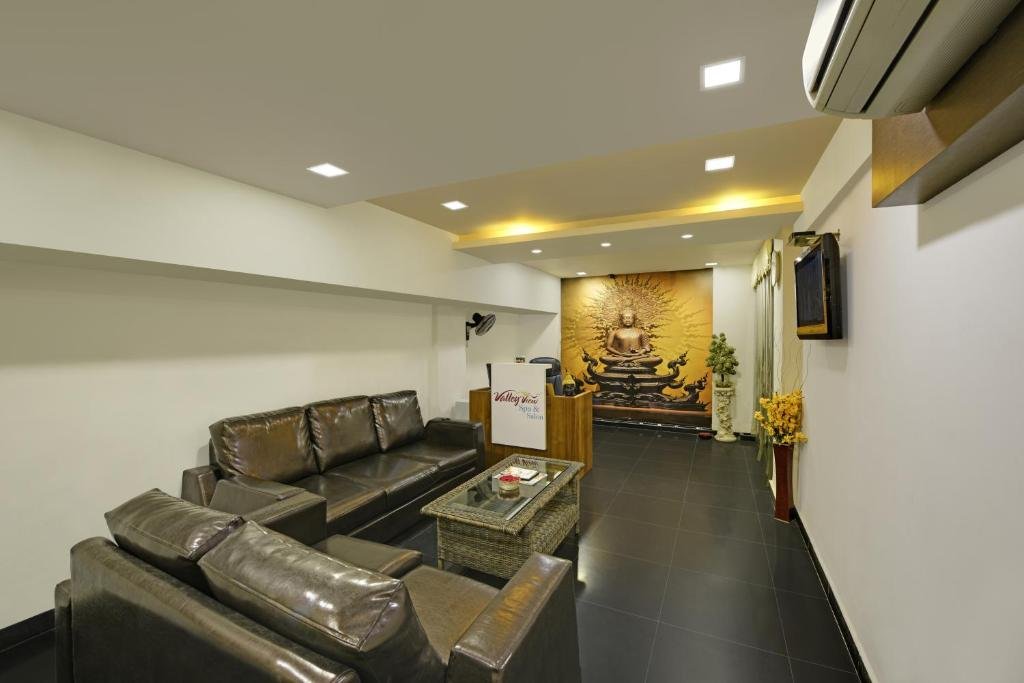
Gaming Zone
    Contact For Reasonable Marriage Packages
Contact For Reasonable Corporate Executive Packages, Dealer Meets, Etc.
Contact For Agency Agreement
 |