
 New Delhi: Actors Sidharth Malhotra and Tamannaah Bhatia during the promotional event for their upcoming film The Vvaan – Force of the Forest at Le Méridien hotel in New Delhi, Monday, September 21, 2026. (Photo: IANS/Deepak Kumar) Mumbai, September 21 (IANS) Independent artist Sargam Vaish has accused the makers of Sidharth Malhotra and Tamannaah Bhatia, 'The Vvan' of using a section of his song ‘Aigiri Nandini’ without his permission in their recently released trailer. On Monday, Sargam uploaded a video on his official Instagram handle in which he said, “I have been working on a project for three years, and one song from that has been used in the film Vvan’s trailer that was recently released, without my permission. The Vvan stars Sidharth Malhotra and Tamannaah Bhatia and is directed by Deepak Kumar Mishra, produced by Balaji Telefilms and TVF. They have used my song for 25 seconds without my permission.” 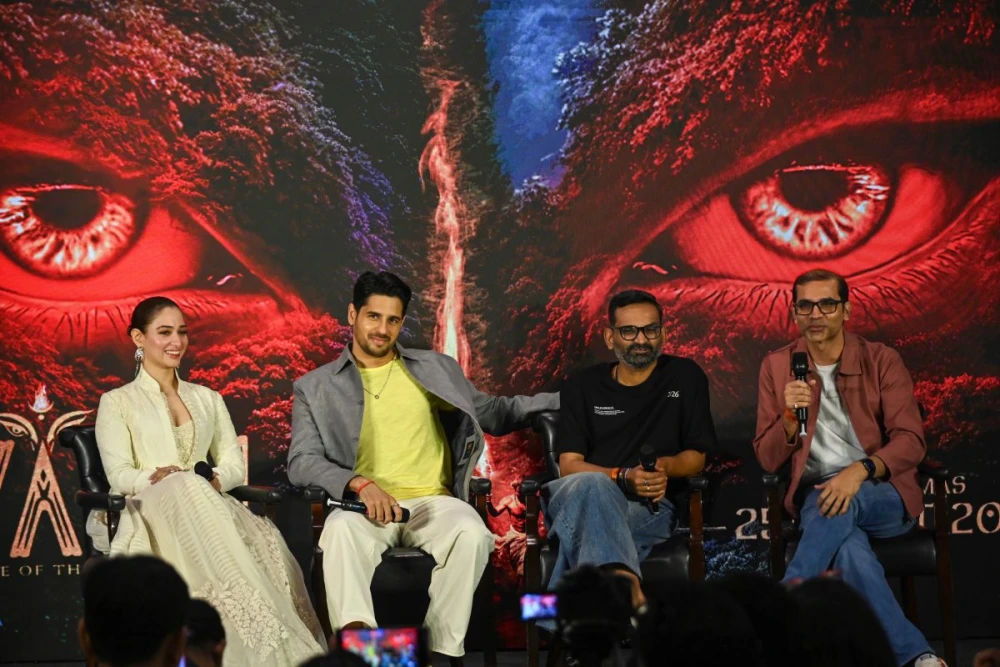 New Delhi: Actors Sidharth Malhotra and Tamannaah Bhatia during the promotional event for their upcoming film The Vvaan – Force of the Forest at Le Méridien hotel in New Delhi, Monday, September 21, 2026. (Photo: IANS/Deepak Kumar) He even threatened legal action against the makers if they did not remove the song from the trailer. Divulging some more details, he added, “From 1 minute 8 seconds to 1 minute 33 seconds, the song’s name is Aigiri Nandini. They have used my master file, production, and vocals as it is. I have signed a deal with a big label; if that is affected, they will be responsible for this. Kindly remove the song from your trailer and the movie; otherwise, my legal team will take care of it.” As the post reached social media, CBFC member Ricky Kej asked the artist in the comments section, “How did they get access to your master recording when you had not released it yet?(sic)” Responding to him, Sargam shared, "@rickykej > Sir, I’m a big fan of yours, so it genuinely means a lot that you noticed this. The song was already given to another big movie and was still unreleased. Somehow, it reached this movie through another circle and was used before the original project. That’s exactly what I’m trying to understand as well." Helmed by Deepak Kumar Mishra and Arunabh Kumar, 'Vvan' is slated to hit the theatres on September 25 this year Ricky Kej questions artist Sargam Vaish accusing 'Vvan' of plagiarism: How did they get access | MorungExpress | morungexpress.com |
Ricky Kej questions artist Sargam Vaish accusing 'Vvan' of plagiarism: How did they get access (2026-09-23T13:18:00+05:30)
Faith in Action conducts Colour Belt Taekwondo promotion test (2026-09-22T13:08:00+05:30)
 A student demonstrates his skill during the Colour Belt Taekwondo promotion test conducted by Faith in Action Taekwondo Academy on May 13.  Students line up for their Colour Belt Taekwondo promotion test conducted by Faith in Action Taekwondo Academy on May 13. Students line up for their Colour Belt Taekwondo promotion test conducted by Faith in Action Taekwondo Academy on May 13.Dimapur, (MExN): The Faith in Action Taekwondo Academy conducted its Colour Belt Taekwondo promotion test on May 13 at Grace Academy, GC Paira Colony, Dimapur. A total of 156 Taekwondo players from Little Star Higher Secondary School, Grace Academy, Pranabananda Women’s College, Immanuel Taekwondo Academy, Little Angels School and Manic Taekwondo Academy appeared for their promotion test, informed a press release from the Academy. Matsungyanger, Nito Sema, Lidya Yepthomi and Kimeri of LSHSS and Wadankokba K Yaden of Grace Academy have obtained double promotion for their excellence in overall Taekwondo techniques during the test, it said. The Taekwondo Colour Belt Promotion test was taken under the World Taekwondo Academy’s curriculum, it added. Faith in Action conducts Colour Belt Taekwondo promotion test | MorungExpress | morungexpress.com |
Amazon is being taken to court for introducing ads to Prime Video. The world will be watching (2026-09-22T13:06:00+05:30)
|
When Amazon started showing ads to its Prime Video subscribers, annoyed TV viewers complained to the consumer watchdog. Now the case is headed for the Federal Court – and already attracting international interest. The Australian Competition and Consumer Commission (ACCC) has accused Amazon Australia of breaching Australian consumer law by “making negative changes” to contract terms for Prime subscriptions, which then affected more than 850,000 people when Amazon introduced advertising to Prime Video. Amazon Prime Video is Australia’s second most popular streaming service, only behind Netflix. The ACCC says Amazon US was also “knowingly concerned” in what happened in Australia. This court case is part of a campaign by the ACCC to enforce the protections in the Australian Consumer Law against big companies – such as Amazon, Coles and Woolworths – involving individually small, but widespread, losses to consumers. Just last month, the ACCC launched a separate court case against Amazon for allegedly unsafe children’s backpacks. The ACCC is increasingly testing the boundaries of what it can enforce under Australian Consumer Law. But what exactly does that law say on this issue – and what defence might Amazon have? What’s the ACCC alleging? The ACCC alleges that between November 2023 and August 2025, Amazon Australia’s Prime contracts contained terms allowing Amazon to make changes to the service and conditions of supply, providing consumers were notified of any adverse changes. The ACCC alleges Amazon relied on these legal terms to:
At the time, more than 850,000 Prime subscribers had paid an annual fee for their subscription, which included access to Prime Video. So the ACCC argues those subscribers were then left with “a degraded Prime Video service for the balance of their subscription”. It also alleges consumers who chose to cancel were not offered “a pro rata refund or other meaningful redress”, which it argues made the terms of the Amazon contract unfair. Significantly, the ACCC also claims Amazon US was involved: that it made the decision to introduce advertising to Prime Video globally, then helped implement that decision in Australia. What Amazon has said and potential penalties An Amazon Australia spokesman said in a statement the company was reviewing the ACCC’s case:
The ACCC is seeking penalties against both Amazon Australia and Amazon US, as well as consumer redress and costs. In this case, the maximum financial penalty would be whichever is highest out of:
Why this case is legally tricky I have argued for years that “unilateral variation clauses” – giving the supplier an unfettered discretion to change the terms of service in a contract – are inherently unfair. The whole purpose of entering into a contract is to lock in a promise to supply goods or services on agreed terms. If the supplier – in this case Amazon – can change the terms at any time, in any way it likes, it undermines the whole point of making a contract. That’s been my view. But the ACCC’s official advice to business on contracts has taken a different position – which might give Amazon a defence. Amazon appears to have followed official guidance The ACCC’s own website currently suggests that a fair contract should allow consumers to terminate without a “penalty” if they don’t like a “unilateral change” from the supplier. This guidance does not explicitly mention needing to offer pro rata refunds for people cancelling contracts. This could be part of Amazon’s defence in the Federal Court. Amazon could argue its contract terms at the time were technically consistent with the ACCC’s own guidance: customers were given notice of adverse changes and could terminate at any time in response. The question for the Federal Court to decide will be whether that was enough – or whether pro rata refunds for Prime Video viewers wanting to cancel their subscription were essential to make the contract terms “fair” under consumer law. Interestingly, I checked my Amazon Prime Video subscription and found a pro rata refund is now offered if I terminate following an adverse change of terms. The ACCC has also pointed out that change in its case filing against Amazon. This court case will not just be closely watched here in Australia. With Amazon US also involved, within hours of the ACCC’s announcement it had already begun to make international headlines. The case will also be followed particularly closely in other countries with similar laws to Australia’s against unfair contract terms, such as the United Kingdom and the European Union. Jeannie Marie Paterson, Professor of Law (consumer protections and credit law), The University of Melbourne This article is republished from The Conversation under a Creative Commons license. Read the original article. |
 Jakub Zerdzicki/Pexels,
Manish Malhotra on designing Kiara Advani’s look for ‘Toxic’: ‘It’s been a fabulous journey’ (2026-09-06T11:49:00+05:30)
 Mumbai, (IANS) Fashion designer Manish Malhotra has opened up about his experience designing Kiara Advani’s looks and costumes for her character Nadia in the upcoming film “Toxic: A Fairy Tale for Grown-Ups.” Sharing a glimpse of Kiara in a classic black velvet lace saree, the designer described his association with the film as a “fabulous journey. Manish also opened up about his journey of creating Kiara’s looks and costumes for Nadia. He revealed that the association with the film began from its first schedule in Bengaluru and continued through Mumbai. The celebrity designer wrote, “Beautiful always @kiaraaliaadvani Ravishing in Our velvet lace classic black saree .. #mymmsaree #kiaraadvani styling @lakshmilehr. It’s been a fabulous journey of designing Kiara’s look and costumes for the character Nadia that she plays in @thenameisyash director @geetu_mohandas #TOXIC from the first schedule in Banglore to mumbai .. working on this film is a going to be a memory that we all will look back with a smile .. @manishmalhotraworld.” In the images, the ‘Kabir Singh’ actress exuded grace and elegance as she posed in a classic black saree, paired with statement earrings. She completed the look with her hair styled in a sleek high bun and subtle makeup, keeping the overall appearance sophisticated and understated. Kiara Advani also shared a glimpse of her visit to Hyderabad as part of the promotional activities for her upcoming film “Toxic: A Fairy” Tale for Grown-Ups. Along with pictures and moments from the city, the actress also expressed her gratitude to fashion designer Manish Malhotra for creating her stunning saree look. Sharing a video from her Hyderabad visit, the ‘Shershaah’ actress reflected on the warm response she received while promoting the film. She thanked the city for making the promotional journey special and praised the energy and love surrounding Toxic. “Hyderabad, you were Everything! Thank you for celebrating Toxic with us and making our promotions so special. The love, energy and madness will stay with me! A special thank you to my dearest @manishmalhotra05 for creating this beautiful saree for me, and for bringing his magic to Toxic through Nadias costumes. And to my Toxic family.. what a ride! Here’s to the madness, the memories and everything we’ve created together,” write Kiara.On a related note, “Toxic: A Fairy Tale for Grown-Ups” directed by Geetu Mohandas, stars Yash in a dual role, alongside Kiara Advani, Nayanthara, Huma Qureshi, Tara Sutaria, and Rukmini Vasanth. The action thriller is slated to hit theatres on 26 August 2026. Manish Malhotra on designing Kiara Advani’s look for ‘Toxic’: ‘It’s been a fabulous journey’ | MorungExpress | morungexpress.com |
Rashmika Mandanna: For me, fragrance is memory (2026-08-17T13:20:00+05:30)
 Rashmika Mandanna: For me, fragrance is memory Mumbai, July 21 (IANS) Actress Rashmika Mandanna has announced the launch of her fragrance brand, and said that for her, perfumes bring back special moments that might otherwise be forgotten. Called Dear Diary, her perfume brand is inspired by Rashmika’s own life experiences and deeply personal reflections. “For me, fragrance is memory. I don’t remember most things, or maybe it's just selective memory, but perfumes bring back special moments that might otherwise be forgotten. It’s how I hold on to the people, places, and experiences that shaped who I am.” She said with Dear Diary, she wanted to give everyone a way to carry their stories with them. “To connect, to feel comforted, to feel a warm hug, and to express who they are, unapologetically," said Rashmika. Rashmika also shared a video on social media talking about her new fragrance brand. She wrote in the caption: “This one’s really really realllllyyyy close to my heart. It’s not just a brand.. not just a perfume.. it’s a piece of me. Scent has always been such an important part of my personal life.. and today I share that with you..” She added: “I am so grateful I get to do this.. I am so excited but also soooo nervous.. but I hope I have all your blessings to go ahead with this..” Ahead of the announcement, the actress had shared her excitement on social media. She dropped a video where she was heard saying, "Okay, I can't believe I am finally recording this. Like you know by now, I have been working on something very very very close to my heart- it's not just a project, it's something I've poured my love into for you- for every message, for every cheer, every bit of love you have sent my way for the years. This is me sharing a little piece of that with you." "I hope you feel it, I hope you love it - can't wait to share it with you. It's launching tomorrow, and I am very very very very excited about this and very nervous, and very grateful," she added.The post was captioned, “Been keeping something special to myself for a while now… and trust me, it’s not easy when all I want to do is share it with you… Just a little longer…”Rashmika Mandanna: For me, fragrance is memory | MorungExpress | morungexpress.com |
Adobe expands India footprint, opens new office (2026-06-17T11:49:00+05:30)
 ANS Photo New Delhi, (IANS): US-based software major Adobe on Friday opened a new office in Noida, as the global technology company continues to expand its presence in India and deepen its focus on artificial intelligence-driven innovation. Located in Sector 129, Noida, the new facility is Adobe's seventh office in India and its third in Uttar Pradesh. The campus currently houses more than 700 employees across engineering and customer-facing functions, according to the company. "As the world is transformed by AI and agentic technologies, Adobe is at the forefront of reimagining innovation and creativity. The opening of our new Noida office marks an important milestone in our continued focus on driving innovation from India," said Abhigyan Modi, Country Manager, Adobe India, and Senior Vice President, Document Cloud. The office has been designed as a technology-enabled, collaborative workspace aimed at fostering innovation, co-creation, and employee engagement in the AI era. Swati Rustagi, Head of Employee Experience, Adobe India, said the space has been built to help teams collaborate more effectively in a rapidly evolving technology landscape. The Noida campus is IGBC Platinum-certified and incorporates sustainable building practices, energy-efficient systems, and environmentally responsible infrastructure. Adobe entered India in 1997 as an engineering research and development centre and has since grown significantly. The company currently employs more than 8,000 people in the nation that largest workforce outside the United States and India accounts for more than one-third of Adobe's global innovation output.On the talent development front, Adobe earlier this year announced free access to tools such as Firefly, Photoshop, and Acrobat for students at accredited institutions across India, as part of its push to build an AI-ready workforce. Adobe expands India footprint, opens new office | MorungExpress | morungexpress.com |
Junk food is promoted online to appeal to kids and target young men, our study shows (2026-06-11T11:51:00+05:30)
Tanita Northcott, The University of Melbourne and Christine Parker, The University of MelbourneThe Australian government has been investigating whether we should ban unhealthy food advertising online, and how it could work. In the United Kingdom, a ban on unhealthy food and drink advertising online will start in October 2025. We recently used the Australian Ad Observatory to investigate targeted junk-food ads on Facebook in Australia. Our study finds that unhealthy food and drinks are promoted in ways designed to appeal to parents and carers of children, and children themselves. Additionally, young men in our study were being targeted by fast-food ads. Kids, young people and parents should be aware of the strategies online advertisers use to normalise unhealthy eating patterns. We should all demand a more healthy digital environment. Our work supports ongoing calls for a ban on junk food advertising online. What did we see in the ads?The Australian Ad Observatory has created the world’s largest known collection of the targeted ads people encounter on Facebook. Our 1,909 volunteers have donated 328,107 unique ads from their social media feeds. This gives researchers an unprecedented opportunity to examine what ads Australians see on social media and how they are being targeted. We searched the database for ads promoting the top-selling unhealthy food and drink brands. These are “discretionary” or “sometimes” foods that tend to be high in fats and sugars. They include fast-food meals, confectionery, sugary drinks and snacks. (To identify unhealthy food and drink categories, we used government guidance on healthy food and drinks.) We also looked at online food delivery companies because of their popularity on digital platforms. They play a likely role in promoting unhealthy foods. We found nearly 2,000 unique ads by 141 separate advertisers observed about 6,000 times by individuals. Ads for fast-food brands made up half of the unhealthy food ad observations in our study. Fast-food giants KFC and McDonald’s combined accounted for roughly 25% of all unhealthy food ad observations. Snack and confectionery brands, like Cadbury, featured in a third of the ad observations. Soft drink brands such as Coca-Cola were promoted in 11% of observations. About 9% of ads promoted online food delivery companies, and typically promoted fast-food options. Other advertisers we might not think of as junk food brands, such as Coles supermarkets and 7-Eleven convenience stores, also regularly promoted junk foods. The power of junk food The vulnerability of children to junk food ads is well established. Children’s exposure to food marketing has been associated with what types of food they prefer and ask their parents to purchase. When they develop preferences for unhealthy foods, this contributes to unhealthy habits and related health concerns. But it’s not only children who are susceptible to unhealthy food marketing. Junk food advertising also shapes the food norms and attitudes of young people aged 18 to 24. Our experiences online and digital technologies more generally can impact our health. These are known as “digital determinants of health”. Food advertisers use the vast amounts of data collected about individuals to target specific audiences. They can seamlessly integrate advertising into everyday life. Our study shows junk food advertising is disproportionately served to young people, especially young men. Young men are seeing a much higher proportion of fast food ads (71%) compared to the sample overall (50%), suggesting fast food is marketed to them more aggressively. Many ads promoted special “app-only” deals, including free delivery, especially for fast food. The ‘halo effect’ We also found examples of ads aimed at busy parents, painting fast food as something that saves parents time, quietens children and feeds families. Even though Facebook accounts are available only to people 13 and over, junk-food ads still use child-oriented themes, such as characters and games. Many appear to be designed to appeal directly to children. This included ads promoting “healthy” foods, such as vegetables, in kids’ meals. The most insidious marketing tactics we found connect junk foods, and the brands synonymous with junk foods, to wholesome or popular activities. This creates a “halo effect”. For example, many ads use “sports-washing” to associate unhealthy foods with healthy sports activities or pleasurable spectator sports. Sports in junk-food marketing can appeal to a broad audience, including young people. While not all of these sport-related ads promoted or displayed unhealthy food products directly, the sport provided the focal point of ads with strong brand-specific elements, therefore forging the connection. Other ads used “mental health-washing”, including ads for chocolate bars, packaged snacks or fast food co-promoting community mental health organisations. Last week a Parliamentary Inquiry into Diabetes in Australia repeated calls for the government to restrict the marketing and advertising of unhealthy food to children on television, radio, in gaming and online. The federal government should soon issue its report on how best to limit unhealthy food marketing to children. Our study supports the government’s proposal to ban all unhealthy food and drink advertising online. The proposed ban should cover not just unhealthy food itself, but also any mention of the brands synonymous with those foods. This is because mentioning these brands brings such foods instantly to mind. We also recommend the government should include all types of promotions. This includes ads from online food delivery companies, supermarkets and sports clubs that cross-promote unhealthy foods. Many are concerned about the impact of social media and its algorithmic content feeds on children and young people. Our study highlights the food and drink ads targeting children, young people and harried parents can also create an unhealthy digital environment. Tanita Northcott, Research Fellow, Melbourne Law School, The University of Melbourne and Christine Parker, Professor of Law, The University of Melbourne This article is republished from The Conversation under a Creative Commons license. Read the original article. |

Online ads are becoming harder to spot – but we’re not powerless to stop it (2026-06-03T13:51:00+05:30)
 Gabrielle Henderson/Unsplash
Daniel Angus, Queensland University of Technology; Lauren Hayden, The University of Queensland, and Nicholas Carah, The University of Queensland Gabrielle Henderson/Unsplash
Daniel Angus, Queensland University of Technology; Lauren Hayden, The University of Queensland, and Nicholas Carah, The University of QueenslandProfound changes are ahead for online advertising. At the recent Google Marketing Live event, the tech giant outlined expanded artificial intelligence (AI) systems for digital ads. What will that look like? Picture ads integrated directly into your conversation with an AI chatbot. Or a discounted price that only you see because an AI system served it based on your browsing behaviour, intent to buy the product, and what’s available locally. And, of course, generative AI tool suites for producing online ads start to finish. Meta and ByteDance (parent company of TikTok) have similarly accelerated the rollout of their own AI-driven advertising systems. Meta is expanding tools that automatically generate and personalise ad images, video backgrounds, captions and targeting across Facebook and Instagram feeds.  Facebook is offering tools to create personalised ads based on users’ interests and behaviours. Meta Facebook is offering tools to create personalised ads based on users’ interests and behaviours. MetaBytedance’s TikTok Symphony suite can generate promotional videos, scripts, AI avatars, dubbed voiceovers, and creator-style content from simple text prompts or product links. At the same time, ads on these social media platforms are becoming harder to recognise. As one example, Instagram and Facebook recently eliminated their familiar “sponsored” labels in favour of smaller “ad” markers. It may look like a minor interface tweak, but it signals something larger: the steady erosion of clear boundaries between advertising, entertainment, recommendation, and ordinary social interaction. Dissolving into the flowSocial media platforms have engineered ads to mimic organic content. Just think of influencer and creator partnerships, AI-personalised search results, or brands using memes. Increasingly, online ads are less of an interruption to the content you consume. Instead, they’re designed to dissolve into the flow itself. When companies buy advertising space on social media, ads are automatically disclosed as a commercial message. With partnerships and AI-personalised results, the platforms currently offer limited forms of disclosure. The result is a blurring of the lines. Products, ideas and political messages are spread through ads that look a lot like all other, non-sponsored content. And the less an ad feels like an ad, the more effective it often becomes. This is precisely where public accountability starts to break down. For several years, researchers like us, working through projects such as the Australian Ad Observatory and the Australian Internet Observatory, have documented how difficult it already is to observe and analyse online advertising systems. Our work has examined everything from political advertising and astroturfing campaigns, the marketing of alcohol and unhealthy foods, and the veracity of “green” claims made by advertisers. In many cases, this work depends on relatively simple but crucial forms of signalling. Researchers need to know what counts as an advertisement, who paid for it, where it appeared, and why it was shown to particular audiences. But those signals are weakening. Blurry and harder to auditA blurred system is harder to audit. Audiences should be able to recognise when they’re targeted with ads. Without clear ad disclosures, we can’t easily detect or question commercial influence in our feeds and search results. New AI tools intensify this challenge. Instead of seeing discrete ads in your feed, you might be getting a stream of product suggestions and discounts nobody else sees. This means regulators and researchers can’t even audit them. These personalised, disguised ads could also make product recommendations that are biased and potentially harmful. For instance, you might be telling an AI assistant that you’re stressed, and suddenly be offered a discount on a case of wine. AI-driven dynamic advertising is highly concerning for products that are unhealthy, harmful or regulated – such as alcohol and gambling. If ads appear one moment and are gone the next, it’s almost impossible to make sure they comply with relevant regulations. The danger is not simply that users may encounter more advertising. It’s that the underlying commercial and promotional logic and messaging become even harder to see. We’re not powerlessAustralia’s emerging digital duty of care framework offers an opportunity to confront this problem directly. Much of the current discussion has focused, understandably, on harms such as misinformation, scams, abuse, or risks to children. But opaque advertising systems are also a public interest issue. They shape political communication, consumer behaviour, health information, financial decision-making, and civic trust. If platforms increasingly profit from blurring advertising and ordinary communication, then stronger positive obligations around disclosure and transparency become essential. Minimum disclosures for digital advertising on social media should include:
This is not about banning advertising. Nor is it about returning to some imagined “clean” internet untouched by commerce. Advertising has always adapted to new media and will continue to do so. But there’s a fundamental difference between visible persuasion and persuasion that disappears into the infrastructure. Without clear signals on what is and isn’t an ad, we lose one of the few remaining ways to understand who is shaping the information environments we increasingly depend on every day. Daniel Angus, Professor of Digital Communication, Director of QUT Digital Media Research Centre, Queensland University of Technology; Lauren Hayden, Research Officer, School of Communication and Arts, The University of Queensland, and Nicholas Carah, Associate Professor in Digital Media, The University of Queensland This article is republished from The Conversation under a Creative Commons license. Read the original article. |

Does ‘free’ shipping really exist? An expert shares the marketing tricks you need to know (2026-04-01T11:24:00+05:30)
|
You’re scrolling through an online retailer, like Amazon, Shein or eBay, and spot a shirt on sale for $40. You add it to your cart, but at checkout, a $10 shipping fee suddenly appears. Frustrated, you close the tab. But what if that same shirt was priced at $50 with “free” shipping? The likelihood that you would have bought it without a second thought is much higher. COVID changed the way we shop and accelerated our reliance on e-commerce. But as online sales have grown, so has the expectation of free delivery. The reality, however, is that shipping physical goods is never actually free. Retailers use subtle marketing strategies and psychological hacks to mask these costs. As a result, consumers are often the ones footing the bill. The magic of zero There is something uniquely attractive about the concept “free”. In behavioural economics, zero is not just a lower price; it flips a psychological switch. When a transaction involves a cost, we instinctively weigh the downside. But when something is entirely free, we experience a positive emotion and perceive the offer as more valuable than it is mathematically. Retailers no doubt realise that offering free delivery is one of the most effective ways to stop a consumer from abandoning a digital shopping cart. The minimum spend trap Perhaps the most common marketing tactic is the free shipping threshold. Sometimes this is phrased as: “Spend $55 to qualify for free shipping.” If your shopping cart is sitting at $40, you face a dilemma. You can pay $10 for postage, or you can find a $15 item to reach the threshold. Many of us choose the latter, reasoning it is better to get a tangible product, such as a pair of socks, than to “waste” money on shipping. This tactic uses the “goal gradient effect”, which describes the tendency to put in more effort the closer we get to a goal. It also works incredibly well for the retailer. Research shows that free shipping increases both purchase frequency and overall order size. Policies with a threshold for free shipping often prompt this exact “topping up” behaviour. The consumer ends up buying things they did not initially want, thus boosting the retailer’s sales. 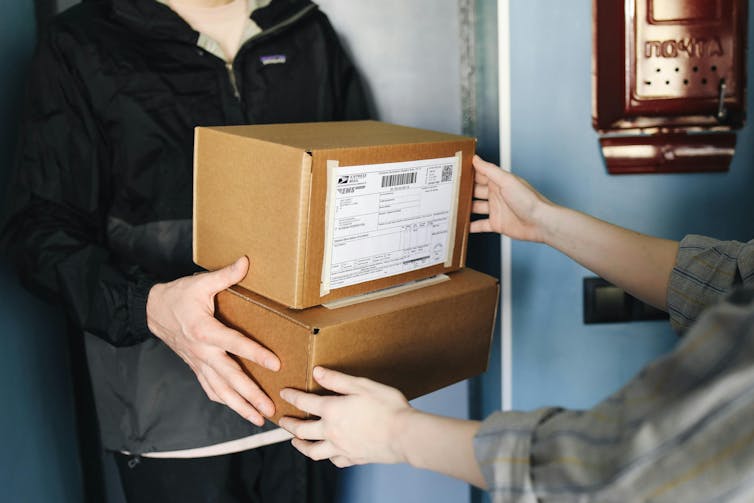 Minimum spend threshold marketing ploys are encouraging consumers to spend more to ‘avoid’ shipping costs. Polina Tankilevitch/Pexels Minimum spend threshold marketing ploys are encouraging consumers to spend more to ‘avoid’ shipping costs. Polina Tankilevitch/PexelsBaked-in costs and the reality of ‘free’ returns Another strategy is unconditional free shipping, where the delivery cost is simply baked into the product’s base price. This allows consumers to avoid the “pain of paying” a separate fee at checkout. However, we are still paying for the postage through higher item costs. For retailers, offering unconditional free shipping without a markup can be difficult to sustain profitably. The bump in sales usually does not offset the lost fee revenue and the costs of fulfilment. A major reason for this lack of profitability is that free shipping leads to significantly higher product return rates. Consumers tend to make riskier purchases if the appearance of waived fees lowers the perceived financial risk of the transaction. For example, you might order the same shirt in two different sizes, knowing you can just send one back for free. Who pays for that added convenience? The retailer, who now has to cover the courier fees twice. The retailer usually won’t simply absorb this cost, but will have to pass it on in other ways. The subscription illusion To combat these unpredictable costs, many businesses are turning to membership, loyalty, or subscription models such as Amazon Prime. Consumers pay an upfront annual fee in exchange for “free” expedited shipping year-round. Membership-based programs successfully increase customer loyalty and purchase frequency, and allow for better customer segmentation. But in the long run, they may actually hurt a retailer’s profit margins. While loyalty rises, the operational costs of fulfilling many smaller, free-shipped orders can potentially outweigh the benefits if not strictly managed. For the consumer, this model manipulates our “mental accounting”. Because we view the upfront fee as money already spent, every additional purchase feels like it comes with a free perk. We end up shopping more frequently on that specific platform just to “get our money’s worth”. Don’t buy the illusion The age of limitless free shipping may be coming to an end. As global supply chain costs remain volatile, we are likely to see retailers raising their minimum spend thresholds, removing offers, or increasing base product prices to compensate. The next time you are shopping online, resist the urge for instant gratification. If you are about to add a $15 pair of novelty avocado socks to your cart, just to save $10 on shipping, take a step back. Ask yourself if you truly need that purchase to arrive this week. Instead of rushing to checkout, let your digital basket fill up naturally over time with items you actually need. You will eventually hit the threshold, but on your own terms. “Free” delivery is just a clever psychological illusion. The cost is rarely eliminated; it is simply redistributed into higher product prices or reframed as a loyalty perk. Don’t let the allure of “free” shipping trick you into paying for more than you intended. Adrian R. Camilleri, Associate Professor of Marketing, University of Technology Sydney This article is republished from The Conversation under a Creative Commons license. Read the original article. |


Akshay Kumar & Wamiqa Gabbi twin in matching outfits as they commence promotion for 'Bhoot Bangla' (2026-03-03T11:31:00+05:30)
 Photo: Wamiqa Gabbi/ Instagram) Mumbai, (IANS) Bollywood actress Wamiqa Gabbi is all set to share the screen with Akshay Kumar for the first time in Priyadarshan's upcoming horror comedy, "Bhoot Bangla". As the project nears release on April 10, the cast has commenced the promotions of the eagerly-awaited drama. Akshay and Wamiqa will make their first stop at Nashik to promote their next. Sharing the professional update on social media, Akshay and Wamiqa were seen twinning in matching outfits. Both of them opted for white shirts with blue denim as their outfit of the day. Dropping two photographs posing with Akshay on her official Insta handle, Wamiqa wrote the caption, "Heading towards Nashik… starting first day of promotions of Bhoot Bangla… need your wishes and prayers (sic)." For those who do not know, "Bhoot Bangla" marks the reunion of director Priyadarshan and Akshay after a long gap of 14 years. The beloved actor and director duo is credited with delivering some memorable hits like "Hera Pheri", "Bhool Bhulaiyaa", "Garam Masala", and "Khatta Meetha". The core cast of the drama has on board some prominents names, including Tabu, Paresh Rawal, Rajpal Yadav, Jisshu Sengupta, and Asrani, along with others. "Bhooth Bangla" will also see Akshay and Tabu coming on screen together after 25 years, after sharing the screen in "Hera Pheri" and "Tu Chor Main Sipahi". Presented by Balaji Motion Pictures, a division of Balaji Telefilms Ltd, in collaboration with Cape of Good Films, and backed by Akshay Kumar, Shobha Kapoor, and Ektaa R Kapoor, the story of "Bhooth Bangla" has been penned by Akash A Kaushik, with the screenplay provided by Rohan Shankar, Abilash Nair, and Priyadarshan. Moreover, Rohan Shankar is credited with the dialogues for the film.Over and above this, Wamiqa will also be seen alongside Ayushmann Khurrana, Rakul Preet Singh, and Sara Ali Khan in "Pati Patni Aur Woh Do" Akshay Kumar & Wamiqa Gabbi twin in matching outfits as they commence promotion for 'Bhoot Bangla' | MorungExpress | morungexpress.com |
Cristiano Ronaldo tipped for ownership role at Spanish club (2026-02-19T12:14:00+05:30)
.jpg) 10-09-2025, Portuguese superstar Cristiano Ronaldo could be involved in an ambitious takeover of a Spanish club fighting for promotion to La Liga, GOAL reports, citing Marca. Ronaldo could become involved in the Saudi takeover of Almeria, who have been purchased by an investment group led by Mohamed Al-Khereiji. The relationship between the new owner and Ronaldo is said to be closer after he facilitated the former Real Madrid star's move to Al-Nassr in 2022. Ronaldo could buy shares in the investment group that has completed the takeover and is linked to media, advertising and sport. The report states it is likely he would then be involved in Almeria in the future. The club are currently battling to win promotion back to La Liga in the final weeks of the season. Ronaldo has been building a business empire away from football, including investments in hotels, fashion, technology and health. He also has a stake in water brand URSU.Ronaldo is likely to feature in Al-Nassr's final two matches of the Saudi Pro League season, against Al-Khaleej and Al-Fateh, though did miss Friday's 1-1 draw with Al-Taawoun. Source Article |
The marketing tricks that have kept Barbie’s brand alive for over 60 years (2026-02-19T12:13:00+05:30)
|
Rejected by the toy industry at first, Barbie is now one of America’s most trusted brands. “She” – the 11.5 inch blonde doll, but also her brand persona – generated worldwide sales of around US$1.5 billion (£1.3 billion) in 2022, and has a brand value of US$590 million. Barbie debuted on March 9 1959 at the New York International Toy Fair as Barbie Teenage Fashion Model. Sixty-four years later, the doll continues to be the subject of cultural, sociological and psychological interest. By creating an iconic brand with special meaning for fans of all ages (Barbie is marketed to children aged three and older), toy company Mattel has successfully extended the lifecycle of the Barbie brand for well over half a century. Barbie is also a polarising figure. The brand embodies the notion of a “double bind”, celebrated as an inspirational role model while at the same time blamed for creating unrealistic expectations of women, particularly when it comes to how they should look. But while most toys remain popular for only two or three years, Barbie’s long-term success reflects Mattel’s responsiveness and adaptability to the changing cultural and political discourse in society and around this doll. So how has the company done it? A Barbie girl, in a Barbie worldResearch shows there are many ways to build and sustain brand characters, but Mattel has used a “multiply” strategy for Barbie. This has involved introducing other characters that play supporting roles in Barbie’s “world”. Over the years, these supporting acts were introduced to portray Barbie’s relationship with friends and family. First there was Ken (1961), Barbie’s boyfriend, then her younger sister Skipper (1964), followed by friends including Midge (1963) and Christie (1968), the first black Barbie character. The storylines and individual characteristics of these additional characters connect to Barbie’s persona and increase brand visibility. Mattel has also used storytelling tactics such as announcing that Barbie and Ken had officially broken up on Valentine’s Day in 2004 (they got back together in 2011). Such stories resonate with fans’ emotions, sustaining interest in the brand. These tactics typically work for a while, but how has Mattel sustained true brand longevity for this long? There are many strategies designed to revitalise mature brands. Mattel successfully extended Barbie’s brand to capture new audiences, drive growth and expand into new types of products beyond dolls. This is a risky endeavour if the brand is stretched too far. But Barbie’s brand has been successfully extended into other profitable categories such as clothes, accessories, cosmetics and entertainment (music, movies and games). And now, after several computer-animated, direct-to-video and streaming television films, Barbie’s first big budget, live action movie will be released in cinemas in July 2023. Early reports suggest the movie – helmed by Oscar-nominee Greta Gerwig, who also directed Little Women (2019) and Lady Bird (2017) – is likely to be rated PG-13. This is not the “universal” rating you might expect for a film about a popular toy. It hints at another strand of Mattel’s successful Barbie branding strategy: nostalgia. Life in plastic, it’s fantasticAlongside ongoing efforts to appeal to young girls, Mattel also deliberately targets older consumers. Specific objects – not just toys but clothes, food such as sweets, or even items like vinyl records – can give a physical form to a set of attitudes, relationships and circumstances for people. This evokes a powerful sense of the past. This kind of nostalgia generates trust and positive attitudes towards a brand, influencing consumer preferences when it comes to choosing between toys. In addition to the upcoming film, Mattel has attempted to capitalise on the nostalgia Barbie evokes in other ways. It sells more sophisticated designer and limited edition lines of collectible dolls aimed at adult fans, for example. These items are typically sold in speciality or boutique stores, and carry higher price tags than the average doll. As Barbie’s brand has expanded and evolved, the doll has also encountered criticism. Over the years, Barbie went through many transformations to look more confident, and was marketed as having many life options, particularly when it comes to work. There are now Barbie dolls representing more than 200 careers – from astronaut, surgeon, paratrooper, game developer, architect and entrepreneur to film director and even US president. But critics have argued that these career dolls are a “misfire attempt at inspiring girls”. This negative perception of the brand’s moral vision is linked to the notion that Barbie is rooted in an ideal of femininity that still characterises women by their physical appearance. Barbie has been accused of promoting unrealistic body standards, stereotyping and objectification of women, as well as having a negative influence on girls’ self-esteem and body image. But research suggested that young girls aged between three and ten prefered the original tall and petite dolls. They were negative about “curvy” Barbie, and this doll also received intense public scrutiny. In 2017, Mattel took another significant step by introducing ethnically and racially diverse dolls of different nationalities, including the first hijab-wearing Barbie doll. However, this approach prompted criticism that Mattel was treating race and ethnic differences as “collectible”, and commodifying culture. Despite this, Barbie continues to be a toy that many children play with. The longevity and iconic status of the doll is a tribute to Mattel’s astute marketing and reinvention efforts. These have helped the brand remain relevant even now, 64 years after it was launched. Sameer Hosany, Professor of Marketing, Royal Holloway, University of London This article is republished from The Conversation under a Creative Commons license. Read the original article. |
